
Disclosure: LabFin is reader-supported. If you sign up for a tool through links on this page, we may earn a commission at no extra cost to you. Commissions vary between providers and our ratings do not — here’s our full disclosure.
To use AI for competitive research well, start with specific questions and public sources, then let AI summarize and compare with citations. Asked what a competitor is “doing”, by contrast, AI mixes stale training data with guesses.
This guide, moreover, covers a six-step workflow, the public sources worth using, and the rules that keep research accurate and ethical. It works with Perplexity, ChatGPT, Claude or Gemini.
How to Use AI for Competitive Research: The Short Answer
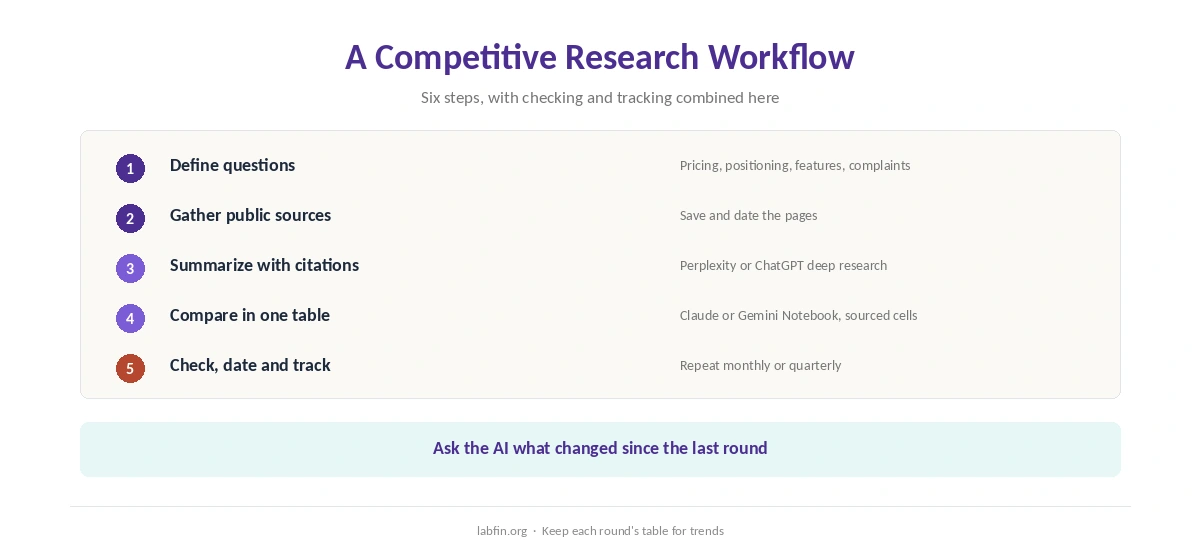
First, list three to five competitors and the questions you need answered, for example pricing, positioning or features. Then use a tool with cited web search, such as Perplexity or ChatGPT’s deep research, to gather current facts.
Next, however, open every source, save the pages you rely on, and date your findings. Our list of the best AI for research ranks tools by independent sourcing studies.
Step 1: Define Questions
Write the decisions the research should support, then turn them into questions: how competitors price, who they target, which features they lead with, and what customers complain about. As a result, the AI searches for answers, not trivia.
Our guide to writing better prompts covers how to frame them.
Step 2: Gather Public Sources
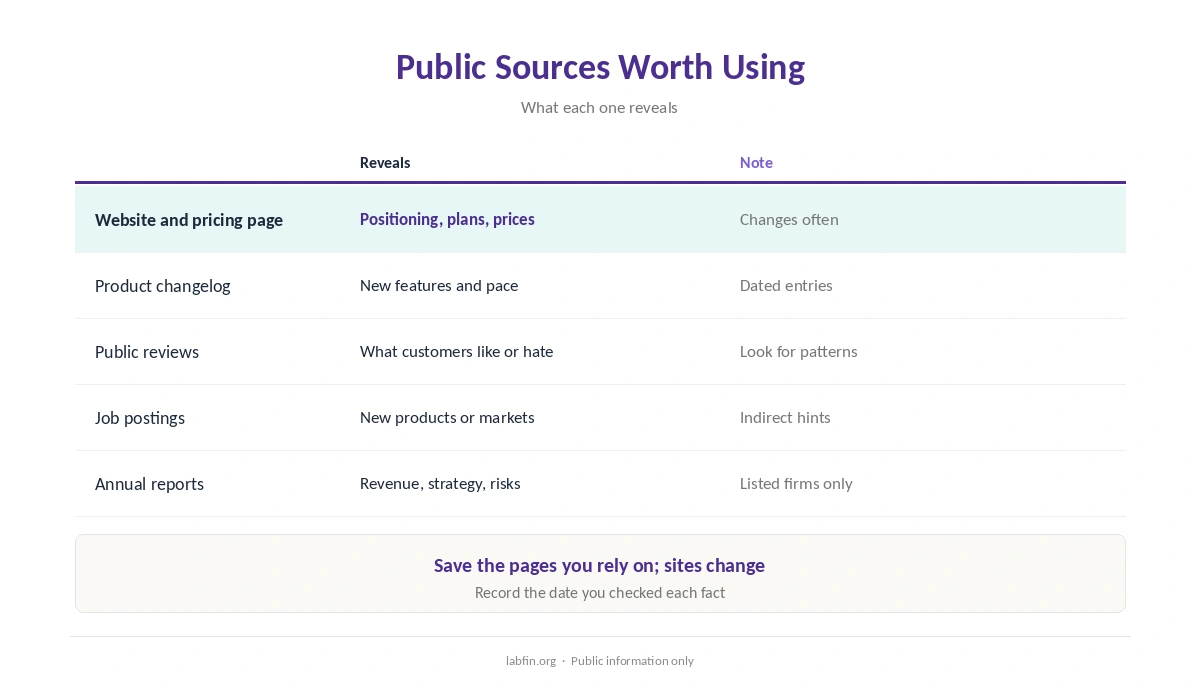
Useful sources include websites, pricing pages, product changelogs, public reviews, job postings and, for listed companies, annual reports. Job postings, for example, often hint at new products or markets.
Save the pages you will rely on, since sites change. Our guide to Perplexity for research covers cited searches.
Step 3: Summarize With Citations
Ask a research tool for a cited summary per competitor and question. ChatGPT’s deep research, for example, writes cited reports on every plan, capped on Free, as our guide to ChatGPT for research explains.
Perplexity, meanwhile, had the best record in the EBU and BBC news study, as our ChatGPT vs Perplexity comparison covers.
Step 4: Compare in One Table
Upload the saved pages to Claude or Google’s Gemini Notebook, and ask for a comparison table with a source for every cell. Notebook, moreover, answers only from what you upload, as our NotebookLM review explains.
Our guide to using Claude for long documents covers large uploads.
Step 5: Check and Date Everything
Open each cited source and confirm it says what the summary claims. Prices and features change often, so record the date you checked each fact.
AI, moreover, can merge two companies’ details or present old facts as current, as our guide to why AI gets facts wrong explains.
Step 6: Track Changes Over Time
When you use AI for competitive research over time, repeat the same questions monthly or quarterly with the same prompts, then ask the AI what changed since the last round. Keep each round’s table, so trends show clearly. Our guide to Claude for research covers research projects.
Our list of the best AI for business covers team plans for shared research.
Rules for Ethical Research
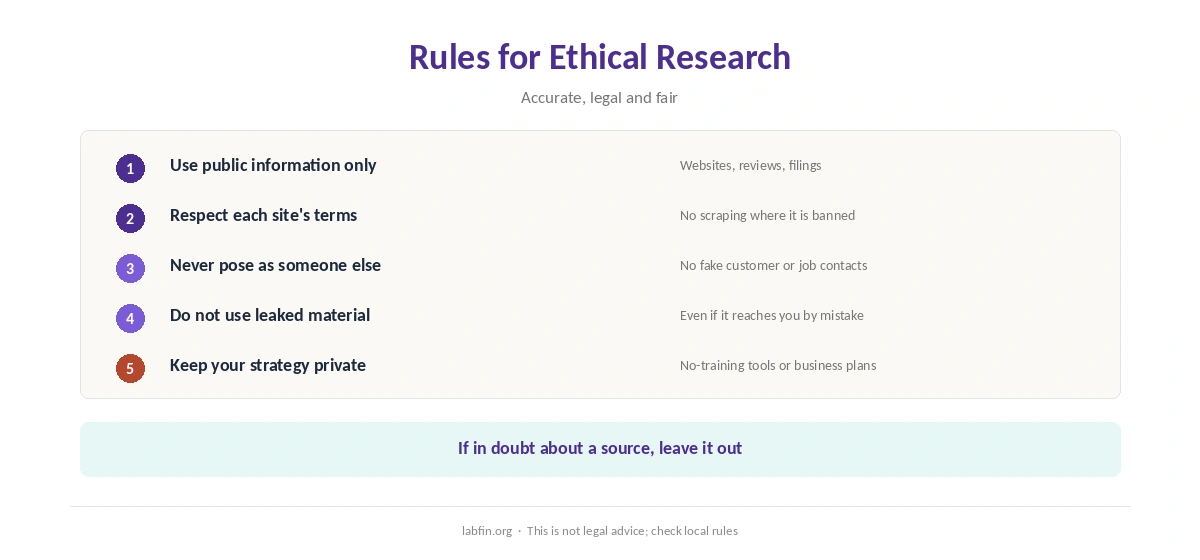
Use public information only, respect each site’s terms, and never pose as a customer or employee to get data. Do not, moreover, paste a competitor’s confidential material if it reaches you by mistake.
Also keep your own strategy out of tools that train on chats, or use a business plan. Our guide to which AI tools train on your data covers the defaults.
How We Research
This guide on how to use AI for competitive research draws on our reviews of each tool and the EBU and BBC and Tow Center studies, read between August and October 2, 2026. One example source is Google’s guidance on helpful content.
We run no tests of our own. Our about page explains how we research, and our list of the best AI for marketing covers related tools.
How to Use AI for Competitive Research FAQ
Yes, with specific questions and cited web search. Without sources, it mixes stale training data with guesses.
Perplexity for cited web answers, ChatGPT’s deep research for reports, and Claude or Gemini Notebook for comparing saved pages.
Websites, pricing pages, changelogs, public reviews, job postings and annual reports for listed companies.
Using public information is common practice. Respect site terms, and never pose as someone else to get data.
Monthly or quarterly, with the same questions, so changes are easy to spot.
The Verdict
AI makes competitive research faster when it works from specific questions and cited public sources. Without them, however, it repeats old facts with confidence.
So define questions, gather and save sources, compare with citations, and date everything. That is how to use AI for competitive research you can act on.