
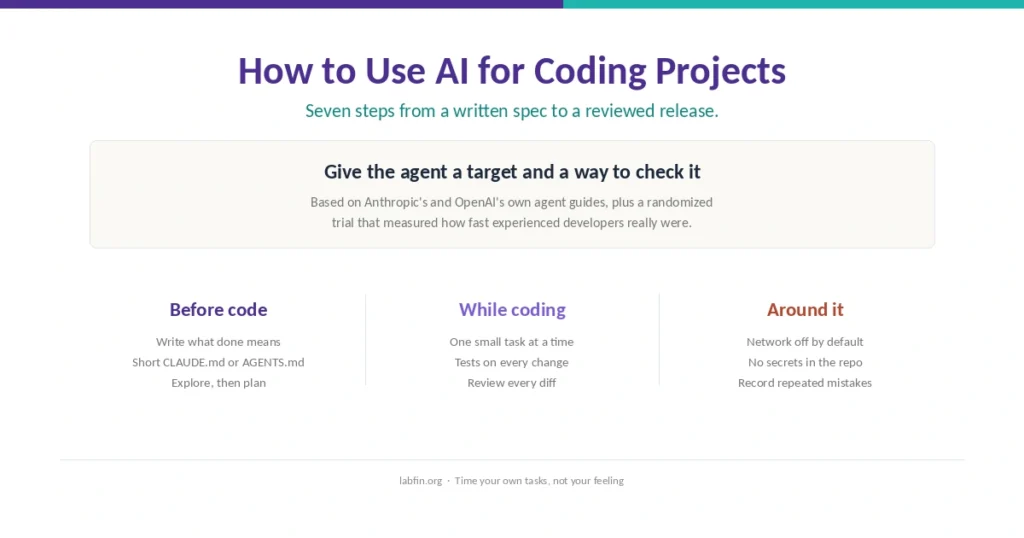
How to Use AI for Coding Projects End-to-End (2026): Seven Steps
Seven steps from a written spec to a reviewed release, based on Anthropic’s and OpenAI’s agent guides. Plus what a randomized trial found about real speed.
Step-by-step guides on how to use AI tools effectively. Practical instructions for setup, workflows, and solving common problems.
Seven steps from a written spec to a reviewed release, based on Anthropic’s and OpenAI’s agent guides. Plus what a randomized trial found about real speed.
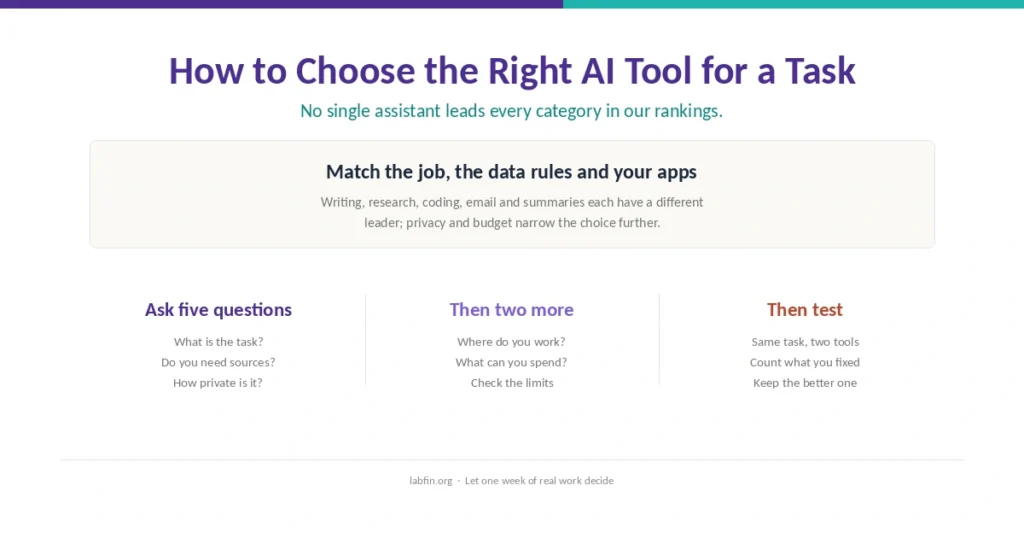
Five questions point to different assistants for writing, research, coding, email and summaries. A six-step way to pick one, built from our category rankings.
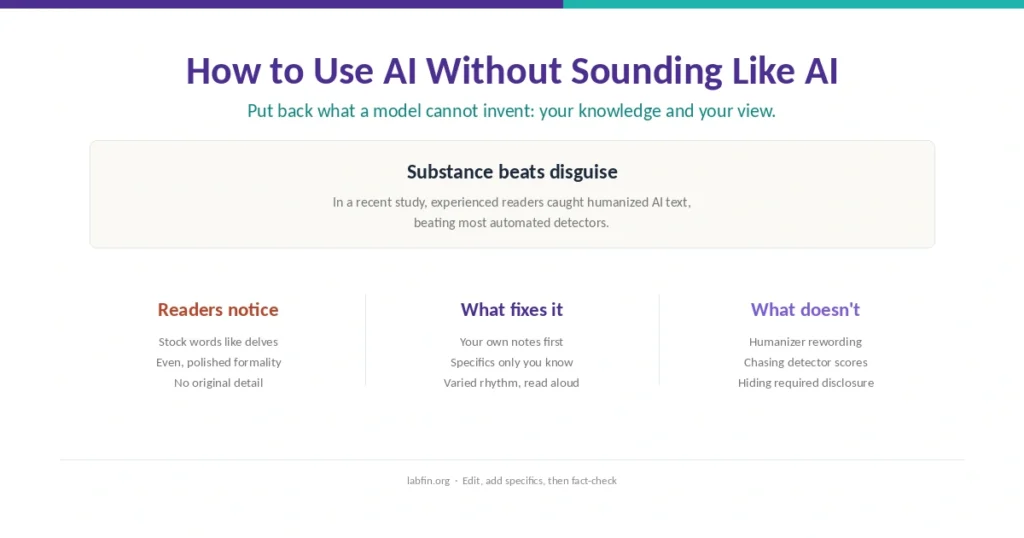
Readers spot AI text by its vocabulary, formality and lack of original detail. Eight steps to write with AI in your own voice, and why humanizer tools are the wrong fix.
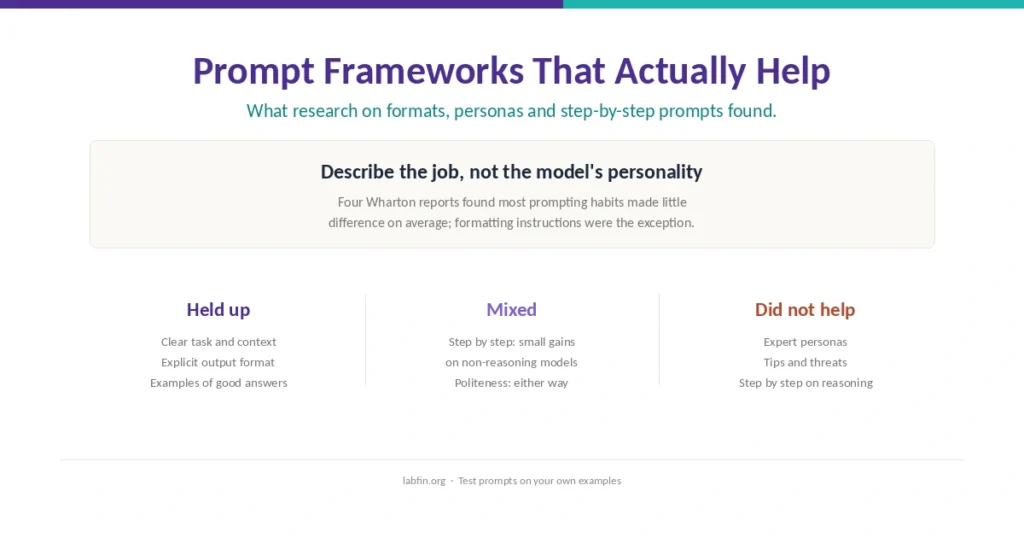
Wharton’s prompting studies found formatting instructions help, while personas, tips, threats and politeness made no consistent difference. What to keep from CO-STAR, RTF and RISEN.
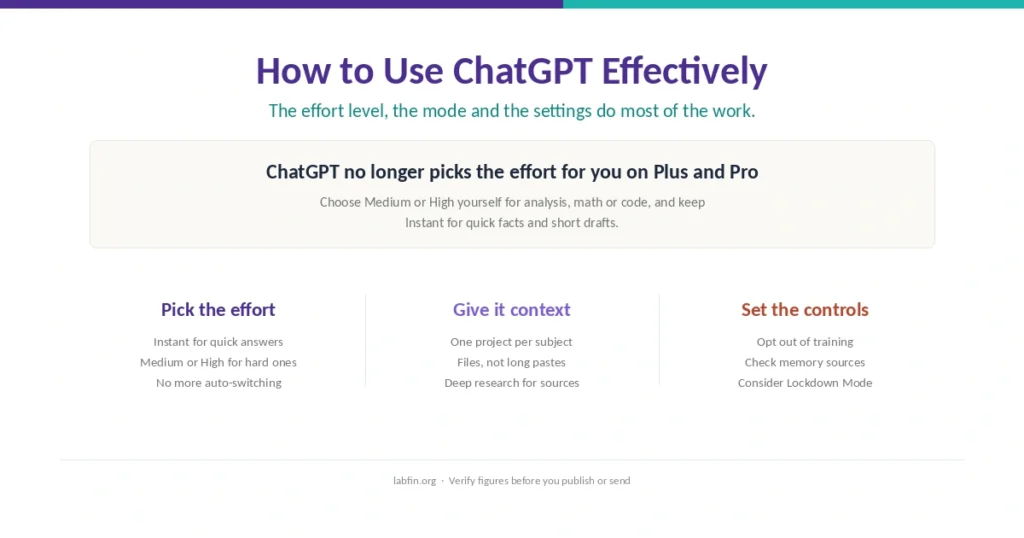
ChatGPT no longer picks the effort level for you on Plus and Pro. Eight habits for better answers, from projects and files to deep research and data controls.
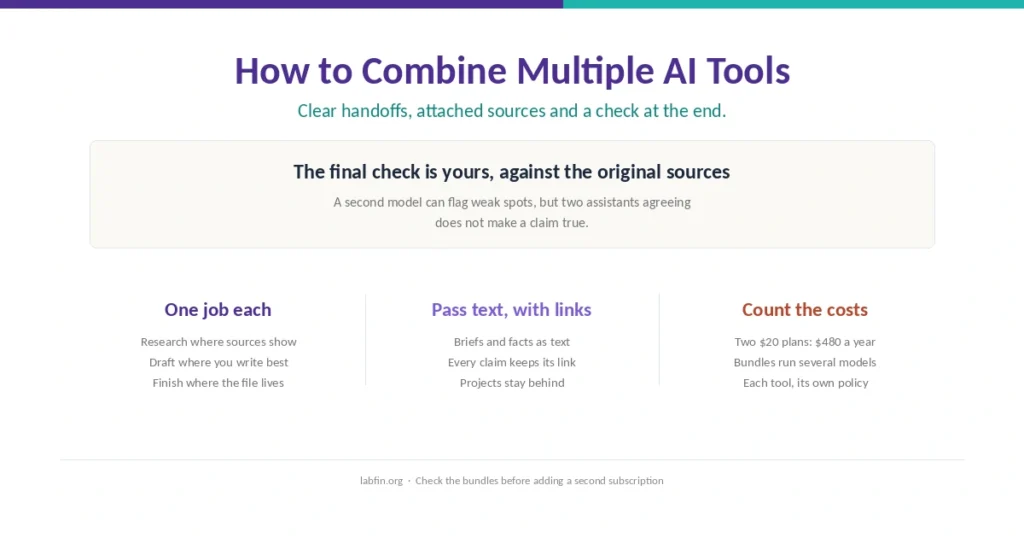
Give each tool one job, pass work along with its sources attached, and check the end result yourself. Plus the bundles that run several labs’ models on one plan.
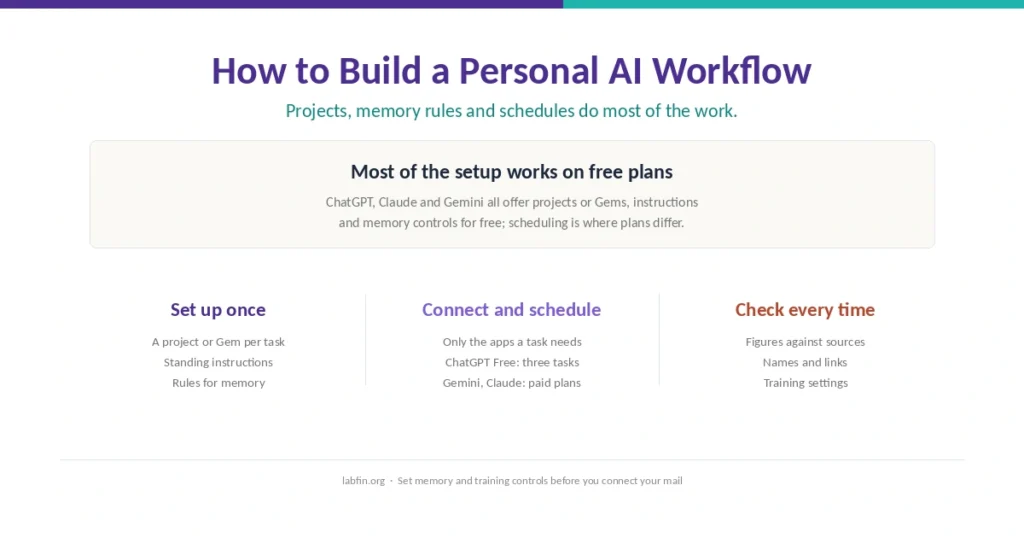
Projects, memory rules, connected apps and schedules do most of the work. Here is how to set them up in ChatGPT, Claude and Gemini, and what each free plan allows.
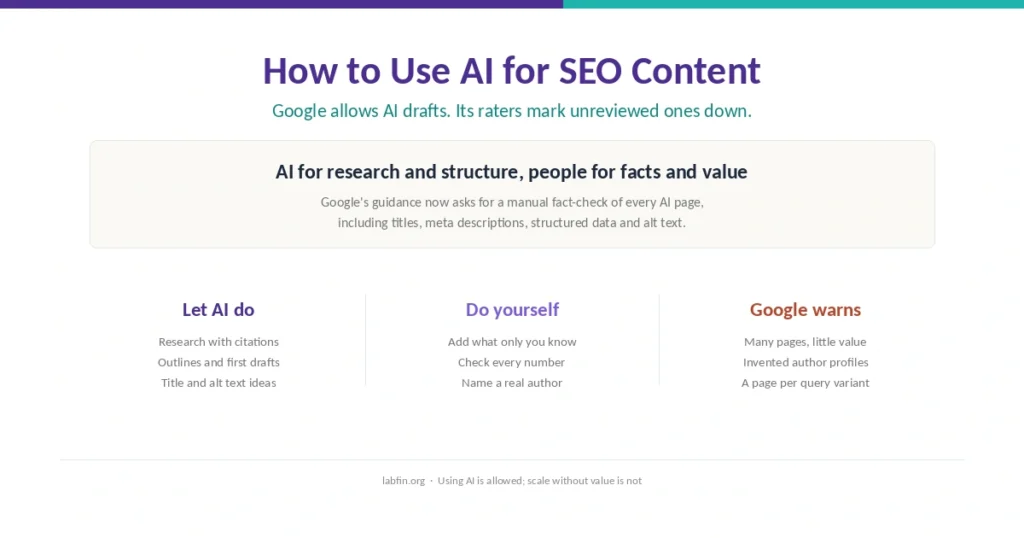
Google lets you use AI for research, outlines and drafts. Its October 1 update says every AI page needs a manual fact-check, metadata included.
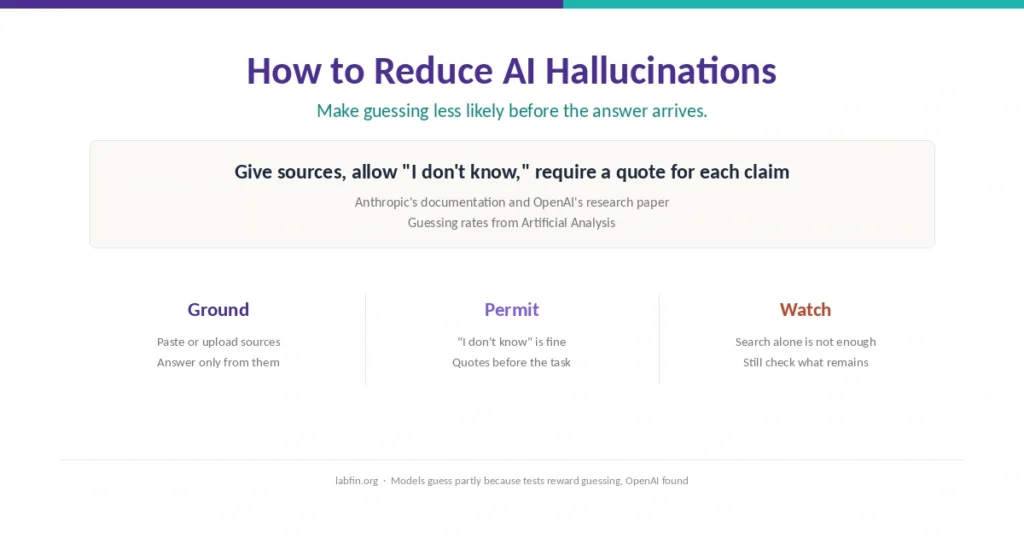
Give the model sources, permission to say I don’t know, and a rule to quote its evidence. Steps from Anthropic’s documentation and OpenAI’s research, plus which models guess least.
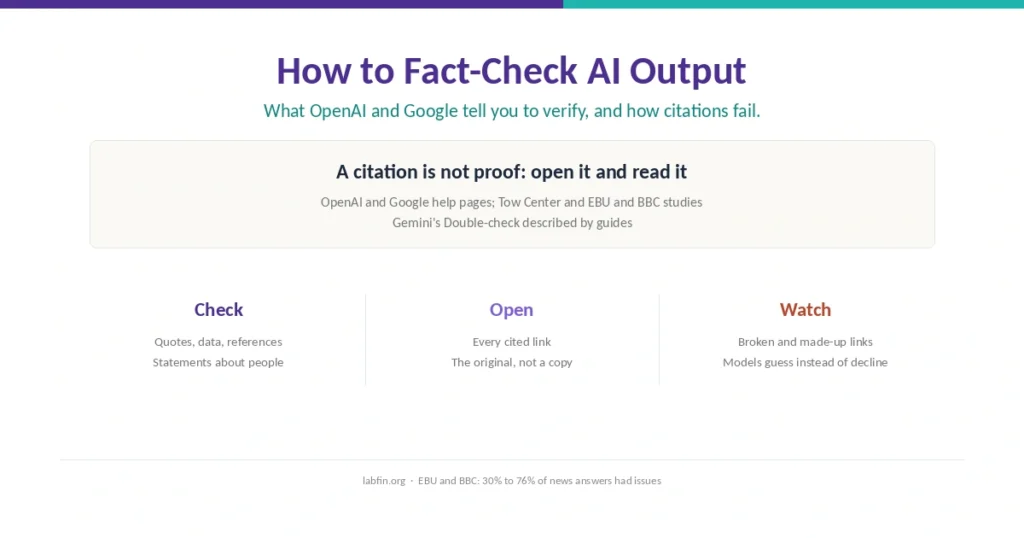
OpenAI and Google both tell users to verify AI answers, and independent studies show why. Steps for choosing what to check, testing citations and confirming facts elsewhere.