
Natural sounding text-to-speech can reduce recording friction, but the best voice generator depends on where the narration will live. A training producer needs controlled pronunciations and alignment with slides; an audiobook workflow needs consistency across chapters; a podcast editor may need generated lines inside an existing timeline. A quick voice preview does not tell you whether those production tasks will work.
This guide shortlists ElevenLabs, Murf, Descript and WellSaid for different narration needs. It does not claim we blind-tested voices or measured human-likeness. We compare what the vendors document and propose a fair, short audition you can run on your actual script, including permission to publish.
Determine whether you need narration or voice cloning
Narration from a licensed library voice is different from cloning an identifiable person’s speech. Most teams can use a stock voice without taking on personal identity risks. If you need an executive or actor’s real voice, obtain explicit contractual permission for the planned language, media, duration and future revisions.
A decision brief should specify output language and accent, long-form consistency, pronunciation lexicon, export type, team reviewers and commercial use. Do not mix a tool for live conversational agents into a ranking for pre-recorded voiceovers simply because both advertise text-to-speech.
ElevenLabs: expressive speech and fine pronunciation work
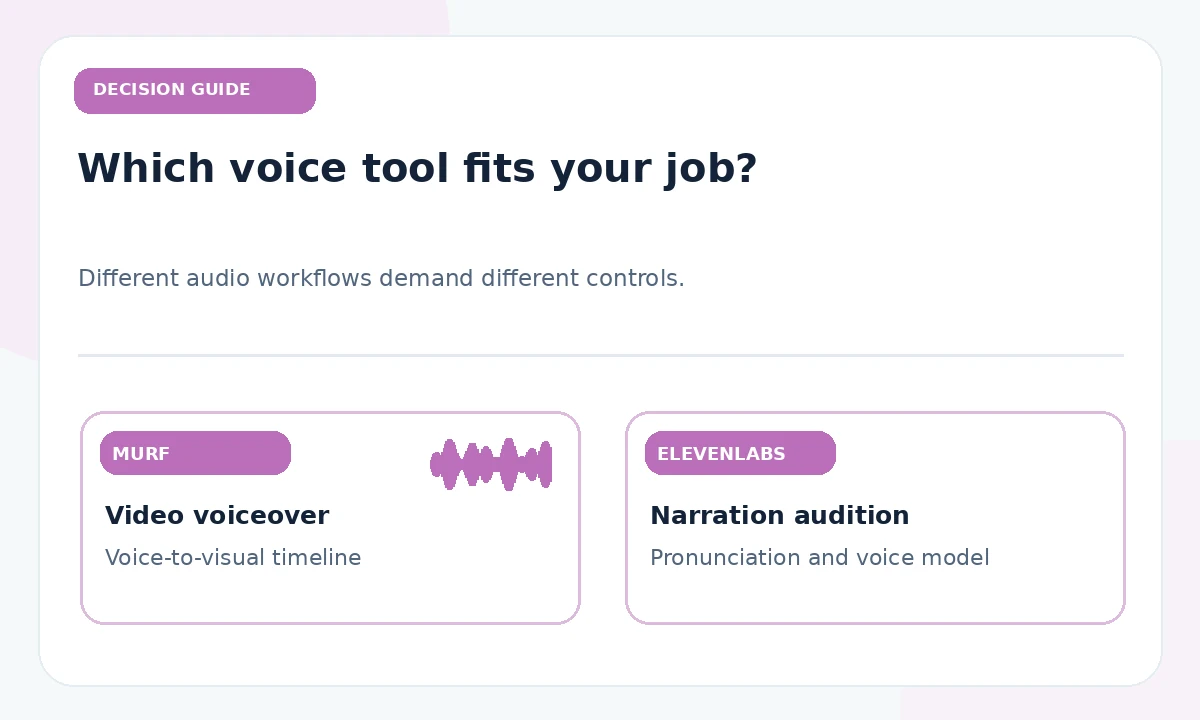
ElevenLabs documents a broad text-to-speech workflow, Voice Design and pronunciation dictionaries. Its current guidance explains that model choice changes pronunciation controls; aliases and phoneme rules are not universal across every model. That makes a small, model-specific glossary test more valuable than copying an old generic ‘best settings’ recipe.
The platform states commercial permissions are tied to paid use and valid input rights. Check the current agreement for your region, especially when using a custom or cloned voice. ElevenLabs can be a strong shortlist candidate for expressive narration, but this article does not assign it an invented audio-quality score.

Murf: voiceover aligned with visuals
Murf Studio provides script blocks, voices, speed and pitch controls, a pronunciation library and a timeline containing voice, image/video and background music tracks. Its help pages explain how to synchronize voice blocks with visuals and review the project before export. This is especially relevant when spoken steps must align with presentation slides.
Murf is worth trialing for narrated explainers or training videos rather than standalone speech files. Inspect whether the permitted plan includes the exports, voices, sharing and feedback needed for your team. Studio flexibility does not eliminate the need to check pronunciation or picture-to-speech timing.
Descript: generated voice inside a spoken-content edit
Descript’s documented strength is editing existing spoken recordings through a transcript, with AI audio and clip tools in the same project. A creator who already trims interviews there may value keeping generated lines and a recorded narrative under one editing workflow instead of exporting many files between apps.
For independent audiobook-style generation or detailed phoneme work, compare it against a dedicated speech tool using the same script. Check the rights and consent requirements for any voice recreation, and distinguish stock narration from altering a recording to imply someone said a different statement.
WellSaid and production-rights decisions
WellSaid is another candidate for organized professional narration, particularly when voice selection, collaboration and contractual terms matter. Verify any current enterprise controls, actor permissions and plan restrictions directly before selecting it for regulated content. A vendor’s marketing language about professional voices is not a blanket clearance for every use.
If formal rights review is required, make the purchasing team compare the exact license, voice availability, use restrictions and retention practices. A clear license can matter more than an enthusiastic online realism ranking. Keep written records of the plan under which audio was created.
Audition with a deliberately difficult test script
Use the same sixty- to ninety-second original script for each product. Include your company name, one number, one abbreviation, a question, a quote and a foreign-language name if relevant. Save each tool’s voice, model and settings, then have two reviewers listen without knowing the vendor.
Rate intelligibility, pronunciation correction effort, pacing, long-sentence consistency and required cleanup. If the first preview sounds excellent but the name remains wrong after corrections, the work may not scale. Record observations instead of giving products fabricated scores in advance.

Estimate costs from the actual amount of speech
Write down monthly finished minutes, average regeneration passes, voices needed, team seats and export requirements. ElevenLabs uses credits with model-dependent consumption, while studio tools may set different project or plan allowances. Do not assume that ten minutes of finished narration requires exactly ten minutes of billable generation.
Add time for script proofing, glossary updates, listening, caption creation and legal review. Some subscriptions permit commercial use only on paid plans; a free preview is not automatically licensed for a public advertisement. Always verify current checkout prices before a purchase decision.
Deliver accessible, well-controlled final narration
Export the approved audio format and preserve the exact script, glossary, model settings and permission records. Listen to the final file through ordinary laptop speakers and headphones. Compare speech volume with music and verify that pauses around instructions make sense at normal playback speed.
Provide captions or a transcript when narration accompanies video, and ensure names and numbers match the approved content. If an important date or policy changes later, regenerate only the affected passages where the tool permits and recheck continuity across edit points. Clear editorial ownership matters more than the voice sounding human.
How We Research
We consulted ElevenLabs Text to Speech documentation, its pronunciation guidance, Murf Studio basics and Murf’s timeline guide, alongside Descript’s September 2026 vendor comparison. We did not run or score audio tests; readers should validate voice and license using their own samples.
Frequently Asked Questions
Choose by the task: ElevenLabs for a detailed expressive-speech trial, Murf for voiceover aligned to visuals, or Descript within transcript-led editing.
Not automatically. ElevenLabs, for example, restricts commercial use on its free tier; check the specific service license and rights in the input.
Use a supported pronunciation dictionary, alternative spelling or model-specific phoneme setting, then listen to the exact exported result.
Usually not. An appropriately licensed stock voice avoids many permission and impersonation concerns.
Run the same representative script through each shortlisted product and document errors, correction effort and final approval time.