
A small gallery plans a short audio introduction to a fictional nighttime exhibition. The script begins with a gentle, atmospheric description of lanterns and paintings, then gives a clear visitor orientation sentence about which exit to use. An expressive synthetic narrator could whisper the artistic opening and then return to an ordinary speaking level. But a poorly placed delivery cue could make the exit sentence unintelligible.
ElevenLabs documents inline square-bracket audio tags for its expressive speech models, including instructions such as [whispers] and emotional cues. The current guidance recommends Eleven v4 while also documenting support in v3 and other eligible models. Tags influence delivery but do not guarantee precise outcomes. No audio was generated or listened to during preparation of this guide; the waveform drawings are educational examples, not measured recordings.
Approve the spoken facts before choosing a voice
Write the entire introduction in plain language and mark the factual phrases that must remain intact. A hypothetical example says “Please use the east gallery door when directed by staff.” That sentence is an invented case, not actual building guidance. In a real venue, only the current access plan and authorized staff can establish which door is appropriate. Keep approved names and route instructions in a separate source sheet.
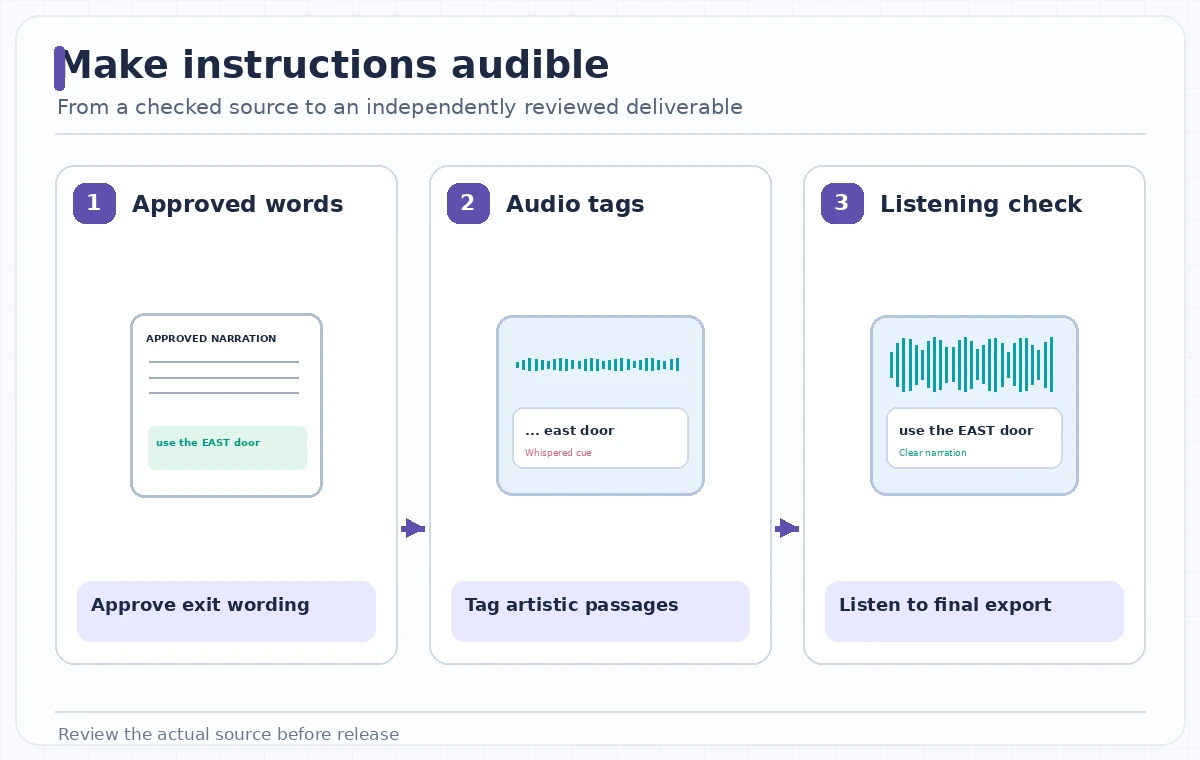
Split the script into a creative section and an orientation section. Specify where atmosphere is welcome and where clarity takes priority. Place the exit sentence on its own line with neutral punctuation, and ask a second person to check it for omitted words and ambiguity. No amount of voice quality can rescue an inaccurate access instruction.
Place audio tags around performance, not facts
ElevenLabs describes short instructions in square brackets at the point where delivery should change. For the artistic opening, an editor might try [curious] or [whispers] followed by a brief descriptive line. Before the exit instruction, return to a normal delivery direction or remove stylistic tags entirely. The exact supported language depends on the model and current documentation, so verify settings in the tool.
Avoid inserting emotional tags inside a door name or other critical sentence. Tags are performance controls, not content authentication. If one tag could be interpreted as a sound effect or a delivery cue, write a more explicit instruction or omit it. ElevenLabs notes that some tags behave inconsistently across voices and outputs, making a human listening pass essential.
Select a voice and generate a small approved segment
Use a voice you have rights to use and do not imply it belongs to a known curator without permission. If the service offers a preset voice, choose one suited to intelligible informational narration. Generate a short candidate that includes both atmosphere and the complete exit sentence so the change in style can be judged. The recommended model and feature availability can evolve; check current plan limits before committing credits.
Keep the exact input text, tags, model setting, and exported candidate. If a new take changes a word or swallows a consonant, compare it to the approved script instead of trusting a text-only preview. A natural-sounding voice is not necessarily accurate or accessible, and a single sample should not be presented as proof of consistent performance for a complete tour.
Compare an atmospheric whisper with a clear instruction
The conceptual comparison shows a low, breathy waveform on the exit phrase in a rejected version and a distinct, intelligible spoken phrase in the target. No output loudness figures are claimed. Listen to the words at the expected visitor playback volume, especially on the smallest device used by the gallery. A whisper may suit the artistic description but can fail for practical directions.
If the directional phrase is too quiet, remove whisper tags before it, adjust the script boundary, select a more suitable voice, or regenerate that segment. Do not artificially normalize a badly articulated whisper and assume it is now intelligible. The key question is whether a visitor unfamiliar with the text can repeat the necessary direction without reading a transcript first.

Check pronunciation, pauses, and unexpected effects
Listen for changed proper nouns, unnatural emphasis on “east,” dropped negations, and nonverbal sound effects that overlap a required line. ElevenLabs documentation warns that some model instructions can be interpreted in unexpected ways. Mark risky transitions where an expressive cue follows immediately after orientation text. A pause before a direction can help listeners, but do not insert so much silence that they think the recording has ended.
Review the full clip, not merely the generated sentence in isolation. A voice that sounds clear in a studio monitor may be hard to hear against gallery ambience. Test the intended delivery device, then provide an accurate transcript and captions where the tour appears in video. For visitors with hearing needs, an accessible written version is important even if the synthesized speech seems exceptionally natural.
Handle voice identity, rights, and disclosure responsibly
Only use voices the project is permitted to generate, including permission for any cloned voice and distribution scope. Do not create a supposed historical recording of a deceased painter or curator and present it as archival evidence. If a fictional character narrates the tour, label the performance accordingly. Avoid using voice style to imply authority that the narrator does not have.
Check the current ElevenLabs product terms, model availability, and applicable policies for public exhibition use. Generated audio may consume credits and voice options differ by account; do not quote an allowance without verification. Retain the approved script, generation date, and edited output so the gallery can replace the narration when factual access information changes.
Give release approval to a reviewer who has not read the script
Ask a second listener to hear the exported narration and identify the exit sentence in their own words. Then show them the approved source and check every noun, conditional phrase, and negation. A transcript comparison alone can miss delivery failures, while listening alone may miss a small factual substitution. Use both. Record the equipment used for the practical listening check without inventing an objective speech-intelligibility score.
Publish only after the gallery’s responsible staff verify the route wording and the production editor confirms audio clarity, disclosure, and available alternative formats. The value of audio tags is controlled expression: atmosphere belongs in the fictional introduction, while real visitor instructions must remain plain, accurate, and easy to hear.

How We Research
This guide was researched on November 4, 2026 from named official materials: ElevenLabs — How do audio tags work with Eleven v3 and v4?; ElevenLabs — Text to Speech best practices; ElevenLabs — How to produce emotions. We checked documented controls, availability cautions, and product-specific limitations, then designed a hypothetical editorial review around clear exit sentence. We did not access a subscriber account, upload source media, generate audio or images, measure model performance, or verify any real venue or product. Illustration outcomes and risks are examples for quality assurance, not claims of tested behavior. Recheck vendor documents before use because interfaces and allowances change.
Frequently Asked Questions
Square-bracket directions embedded in text that can influence speech style or nonverbal delivery in supported models.
ElevenLabs documents support in v3 and v4 and currently recommends v4, while availability varies by model and product.
It may harm intelligibility. Keep important navigation or access information clear and test on the actual playback device.
No. ElevenLabs states that results can vary by voice and tag interpretation; preview and review the actual output.
Describe synthetic or fictional voices accurately and never imply the audio is a genuine archival recording or a person’s authorized voice without evidence.