
Parallelism controls capacity, not coverage
A museum runs a visitor information kiosk that must work in several supported browsers, operating systems, and screen-reader modes. A matrix workflow can generate a job per combination, but running every job simultaneously may overwhelm limited runners, test accounts, or a shared staging server. GitHub Actions supports jobs.
List the browser and accessibility combinations first
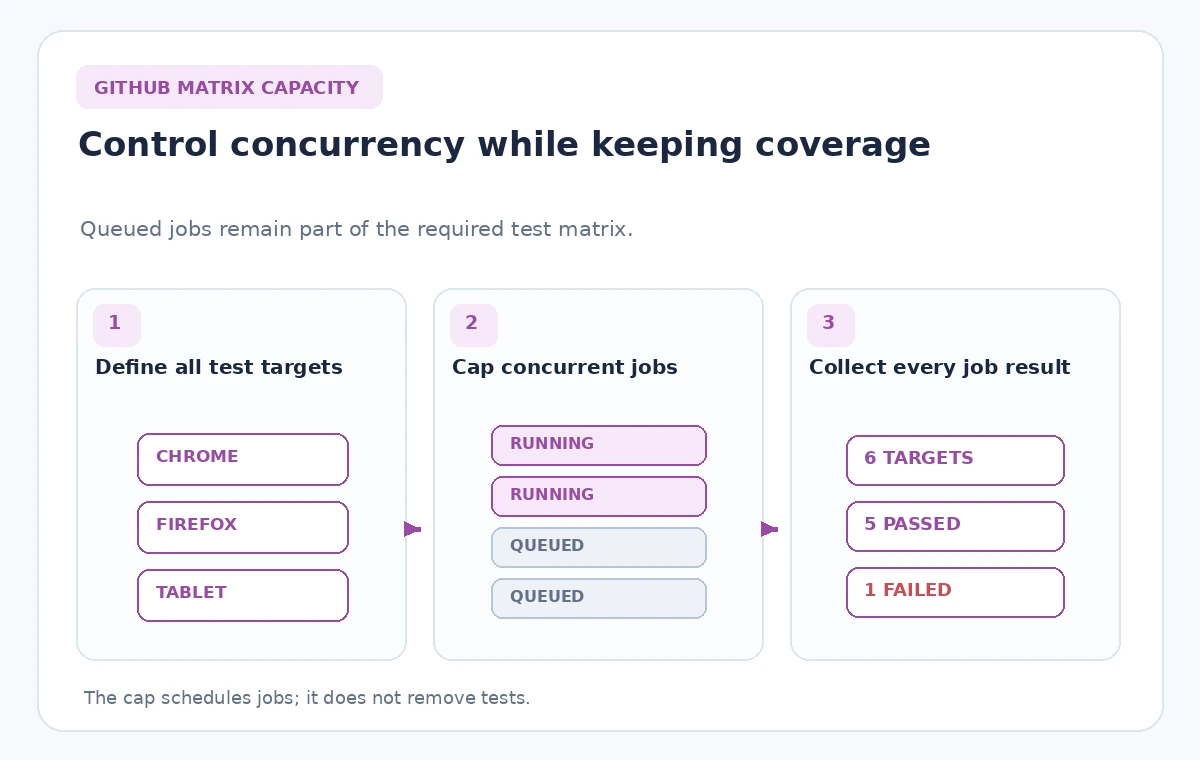
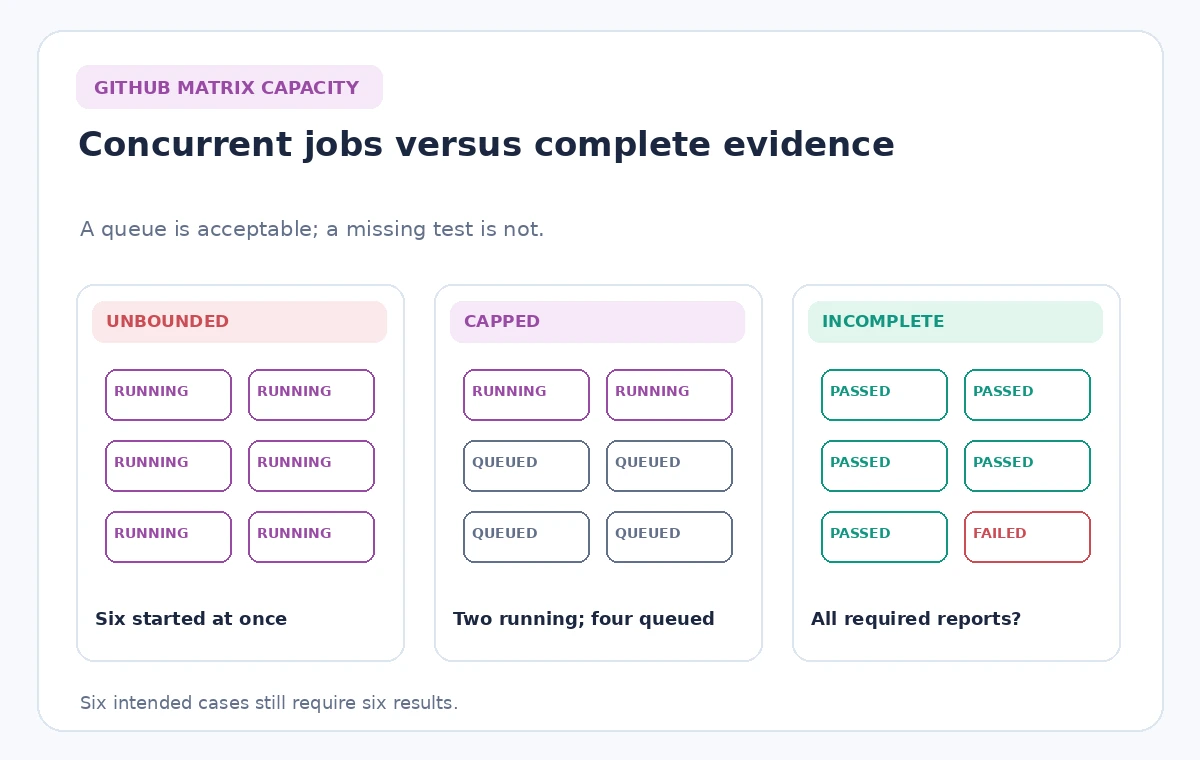
Before editing workflow YAML, define which environments are actually supported. A fictional kiosk might require a current desktop browser, a tablet view, and a keyboard-only flow. Include each in a matrix with a clear, stable identifier and expected check set. Do not choose a test matrix from marketing claims about device popularity alone; use the museum’s deployed hardware and accessibility requirements. If a device or browser is unsupported, document that policy outside the workflow. Count the generated jobs independently of the max-parallel value. A cap of two on a six-job matrix changes scheduling, not the intended total of six checks.
Apply max-parallel inside the job strategy
GitHub documentation shows strategy.max-parallel under a matrix job. For example, a value of 2 permits at most two matrix jobs to run simultaneously even when runners are available for more. The workflow still enumerates every matrix combination, subject to the separate effects of cancellation, failed jobs, and organization limits. Avoid confusing max-parallel with the number of runners provisioned for the repository or with process-level concurrency inside a test. It is a bound on simultaneous matrix job execution, not an assurance that exactly two will run at all times. Test the schedule against real job durations and queue behavior.
Do not mix capacity limits with fail-fast
The fail-fast option can cancel queued or running jobs after certain failures, whereas max-parallel limits concurrent execution. Those choices solve different problems. For a required release validation run, the team may want to collect every browser failure instead of canceling remaining combinations on the first red result. Decide whether fail-fast should be disabled for a full audit and record the reason. A completed run with canceled combinations does not demonstrate coverage, even when the overall workflow presents a simple status. The reporting script should list expected, passed, failed, canceled, and missing matrix jobs separately. Do not infer that a cap makes failure handling conservative by itself.
Protect shared staging services from a test storm
Browser tests may all attempt to log in with a limited testing account, download the same exhibit media, or write temporary session data. A modest max-parallel value can reduce contention, but it does not enforce test isolation. Each job should use synthetic visitor records and separate temporary directories or account namespaces. Avoid sending real ticket or donor information into the CI environment. If the staging service has rate limits, record observed throttling and match the cap to the service’s permitted load. For more deterministic tests, use local fixtures where possible and run a separate end-to-end smoke test with the authorized staging system.
Compare unlimited, capped, and incomplete runs
An educational diagram can show six matrix jobs released at once, a cap of two that queues the remaining jobs, and a run where one required job was canceled before evidence was collected. These are conceptual scheduling states, not measured GitHub timings. A slower but complete run may be more useful for audit than a fast run with missing browser checks. However, lower concurrency does not guarantee stable results: flaky tests and shared state can still break assertions. Track the difference between queued, running, passed, failed, and canceled so project managers know whether capacity, functionality, or policy prevented an approved release.
Separate job-level status from the approval decision
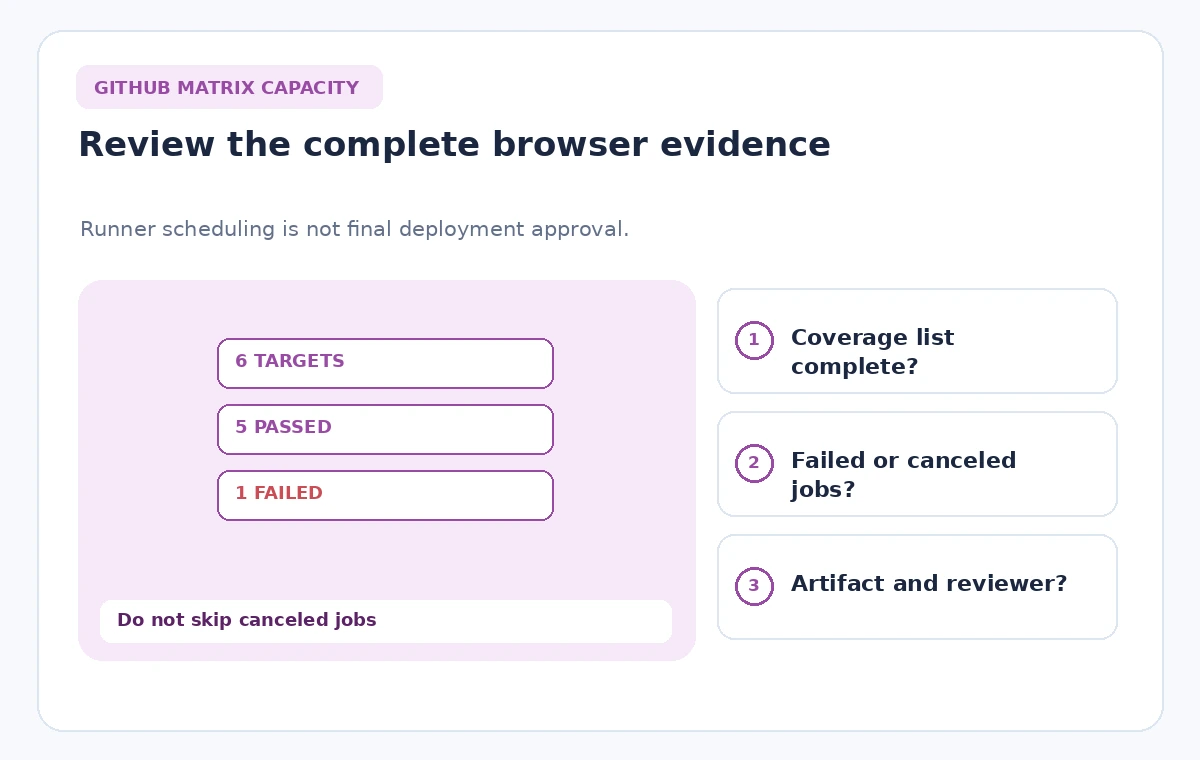
A release workflow should not say approved merely because the test matrix eventually finished. Check that the expected set of matrix combinations actually ran and that each required browser and accessibility condition has valid results tied to the intended commit. For kiosk content, review keyboard navigation, focus order, high-contrast display, and any locally required language settings. Keep screenshots and logs free of private data. A release coordinator must sign off on the exact build artifact and source revision after reading the failures. max-parallel contributes operational predictability, not a software assurance certificate.
Collect evidence without a misleading summary
Use a job or reporting step that enumerates the full expected matrix and compares it with uploaded test artifacts. Missing evidence should fail the release gate, even if another operating system passed similar checks. Record the exact commit, test fixture version, runner image, and browser versions where available. Include artifacts only when they are suitable for the organization’s retention and privacy policy. Never use a single green icon to stand for every device. A concise report can say five of six combinations passed, one failed focus navigation, and release blocked. The document should not guess how the missing job would have behaved.
Rehearse resource limits and cancellation
A staging rehearsal can use a small synthetic matrix with multiple independent browser checks and a deliberately slow job. Compare the queue under caps of one and two and confirm that every expected job produces evidence. Then introduce a controlled failure and observe how the chosen fail-fast behavior changes completeness. These are suggested tests, not measurements claimed by this article. GitHub runner availability, plan limits, and workflow features evolve, so verify the current rules before rollout. Keep a rollback path for a cap that increases CI wait time beyond operational needs. Public deployment remains blocked until test evidence and staff approval are complete.
How We Research
We reviewed these named official developer references: GitHub Actions matrix variations guide; GitHub Actions workflow syntax. We compared documented API behavior, supported configuration fields, and stated limits against a hypothetical museum workflow. We did not perform live customer API calls, examine restricted collection records, run a real production benchmark, or measure service speed or costs. The conceptual figures show workflow logic rather than screenshots or test results. Reconfirm documentation and available API versions before deployment; use authorized staging tests and human review for every public-facing workflow.
Frequently Asked Questions
No. It limits concurrent execution; the matrix still defines the intended jobs.
No. Runner availability, queued work, and job duration affect actual simultaneous execution.
No. fail-fast governs certain cancellations after failures, while max-parallel governs concurrency.
No. Every required combination needs its own verified evidence and release review.
Show expected jobs, passed, failed, canceled, and missing evidence tied to the release commit.