
Poe presents a large catalog of AI bots, including models from major providers and user-created experiences. That makes experimentation convenient, but the newest-sounding name is not automatically the right choice. A chatbot good for a short email may be wasteful for quick facts; a low-cost bot that repeatedly fails a precise coding task may cost more than one careful pass with a stronger model.
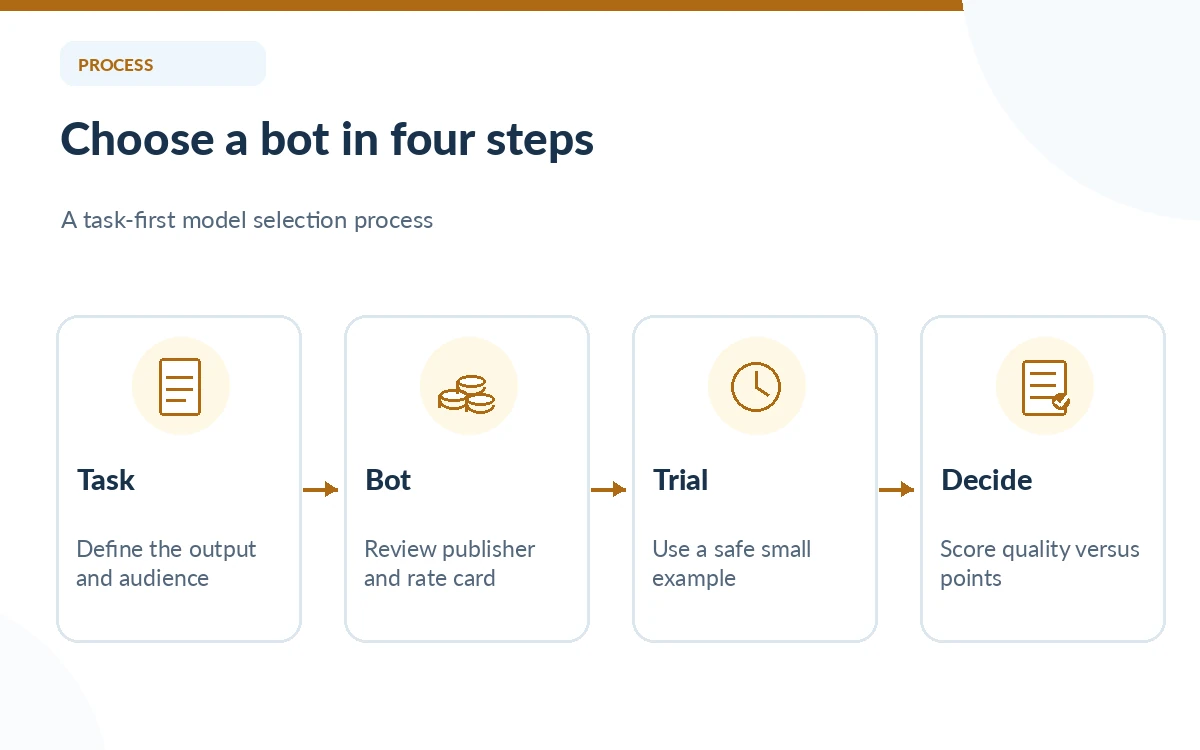
This guide gives you a practical way to choose Poe AI models in October 2026: define the job, inspect the bot publisher and rate card, test with a small public example, compare errors, and only then commit a larger input. It avoids ranking models we have not benchmarked.
Begin with the task, not a leaderboard
Start by naming the output you need and how you will check it. For a simple summary, prioritize legibility, speed and low point cost. For a complicated code explanation, prioritize reproducible reasoning that you can verify in your own environment. For images or video, move to a bot built for that medium rather than expecting an ordinary text assistant to produce the same kind of asset.
Define acceptance criteria before trying models. A customer support draft might need a friendly tone, a correct policy link and no invented refund promise. A document analysis might need three page-specific citations. A research answer needs sources you can open. This prevents you from mistaking a confident writing style for actual suitability.
Distinguish official bots from community tools
Poe’s catalog includes official model access and user-created bots. A community bot can wrap a useful prompt or interactive workflow, but its displayed name is not sufficient proof of which underlying system it uses or how it handles supplied content. Read the bot description, any creator disclosures and available policy information before sending material that belongs to someone else.
If the material is confidential, regulated or commercially sensitive, first ask whether Poe and that specific bot are authorized by your organization. Avoid uploading client contracts, personal identifiers or unreleased source code to unknown third-party bots. Use synthetic examples for testing. If stronger security guarantees are required, a direct provider account or an approved enterprise environment may be a better fit.
Check rate cards before a large prompt
Poe’s official help center explains how to open Rates from a bot page and how to inspect points used after a message. Some bots have fixed task charges, while others vary with input and output length. A large pasted document and a long conversation can therefore behave differently from the first-message estimate. Starting a fresh conversation can also avoid paying for irrelevant earlier context.
Make a small cost worksheet: bot, typical input size, expected output, points observed and whether an answer needed retries. Use the current bot’s rate card for the actual decision. A quoted model cost from an old article may no longer apply because Poe changes the catalog and the model provider may alter its own pricing.
Run a controlled three-prompt comparison
Use three representative tasks: a short rewrite with hard constraints, a factual question whose answer you can verify against a trusted source, and one domain-specific task that reflects real work. Submit the same request with comparable settings to two or three candidate bots. Do not start with private documents or ten elaborate prompts; a short diagnostic is cheaper and easier to judge.
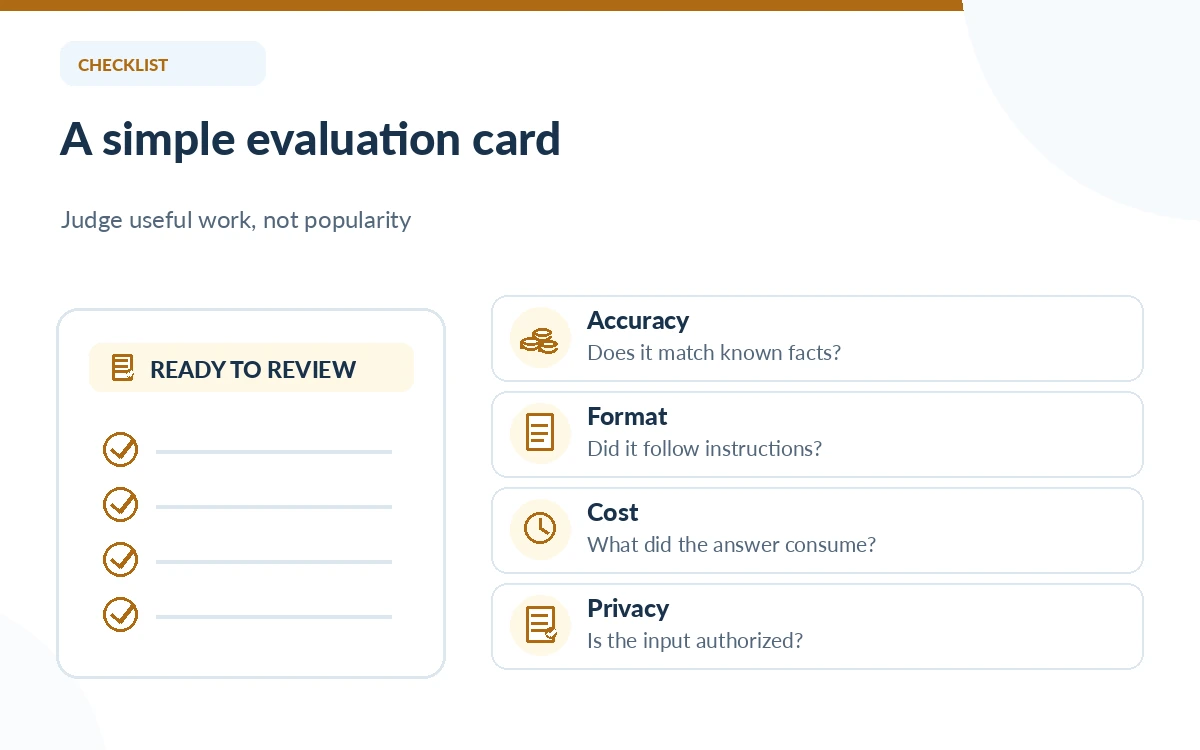
Score every response against explicit criteria: follows instructions, accuracy, amount of revision required, readable formatting and points spent. Treat this as a personal selection exercise, not a published industry benchmark. Different prompt wording and model updates can change the result. Save a short record of your test prompt and date so you can repeat it after major product changes.
Decide when to escalate to a stronger model
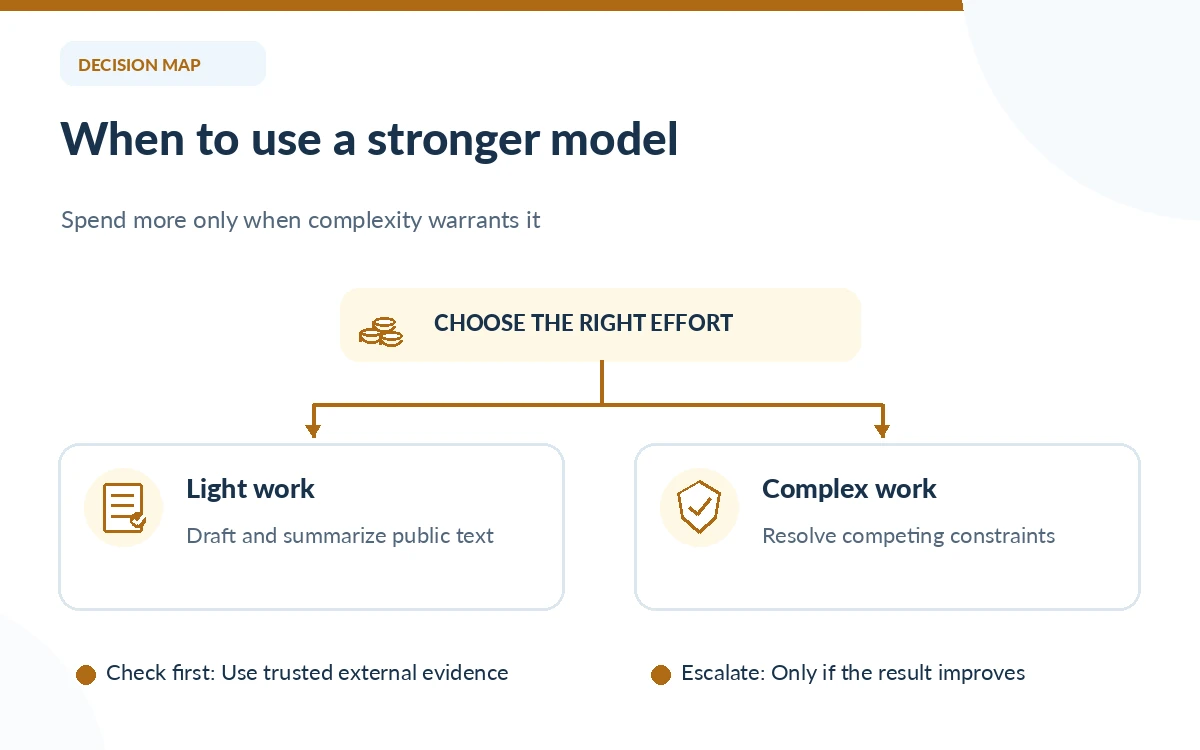
An effective workflow can use inexpensive bots for brainstorming, extraction and first drafts, then move selected difficult tasks to a more capable option. However, switching models makes sense only if the second bot reduces errors, labor or uncertainty enough to justify its point cost. For source-heavy claims, use external primary materials instead of buying a more confident-sounding answer.
For example, a cheap model can turn a public meeting agenda into five bullet points; a higher-tier model might be worth using to analyze contradictory requirements across several documents. You still need human review of the final result. A model name alone does not establish compliance with a law, a company policy or a software test suite.
Keep chat history and spend under control
Long-running chats accumulate context, and some bot rates account for material repeatedly sent or processed. Poe’s purchase help recommends shortening prompts and starting a new context when changing topics. Consider organizing separate conversations by purpose so the bot is not charged to read a long unrelated history. Keep necessary facts in a concise handoff prompt instead of pasting an entire prior conversation.
After a representative response, open its Info view to see the points consumed. In the Poe web settings, Points History can show broader usage. Build a simple personal threshold: if three attempts fail your criteria, stop and revise the brief or select a different tool. More retries with the same vague request are rarely an efficient substitute for clear instructions.
Keep a model-selection card for the team
If colleagues use Poe, document a short recommended set of use cases rather than mandating one model forever. Your card can identify a low-cost drafting option, a verified analytical option and any specialized media tools, each with a privacy warning and a link to its live rate card. Avoid reproducing confidential example prompts in that shared document.
Review the card periodically. Poe adds and changes models, and the best choice will differ between content drafting, programming and visual generation. The repeatable skill is not memorizing a 2026 ranking; it is knowing when an output meets a clear acceptance test at an acceptable point cost with suitable data controls.
How We Research
We reviewed Poe’s October 12, 2026 official FAQ, cost-management advice, and bot discovery catalog on October 26, 2026. We devised the three-prompt evaluation exercise; it is a reusable reader checklist, not results from a controlled benchmark or a guarantee about any named model.
Frequently Asked Questions
There is no defensible universal choice. Select by task, verified output quality, points consumed and data-handling requirements.
Browse Poe’s Explore catalog and inspect the individual bot details. Do not assume a similar display name means the same publisher or model.
Sometimes, if it meets the acceptance criteria without repeated retries. Measure total useful work rather than point cost per message alone.
It can for bots whose rates depend on processed context. Consult Rates and actual message Info instead of assuming a fixed price.
Not without explicit authorization and a satisfactory review of platform and bot-specific data handling. Use synthetic material for initial comparisons.