
Lovable sells AI-assisted application building through shared workspace credits, not a simple per-user seat charge. The distinction matters: adding collaborators does not automatically multiply your paid build budget, and published apps may create additional infrastructure usage. A plan that is comfortable for designing a prototype may be insufficient for an operational app with user logins, storage and traffic.
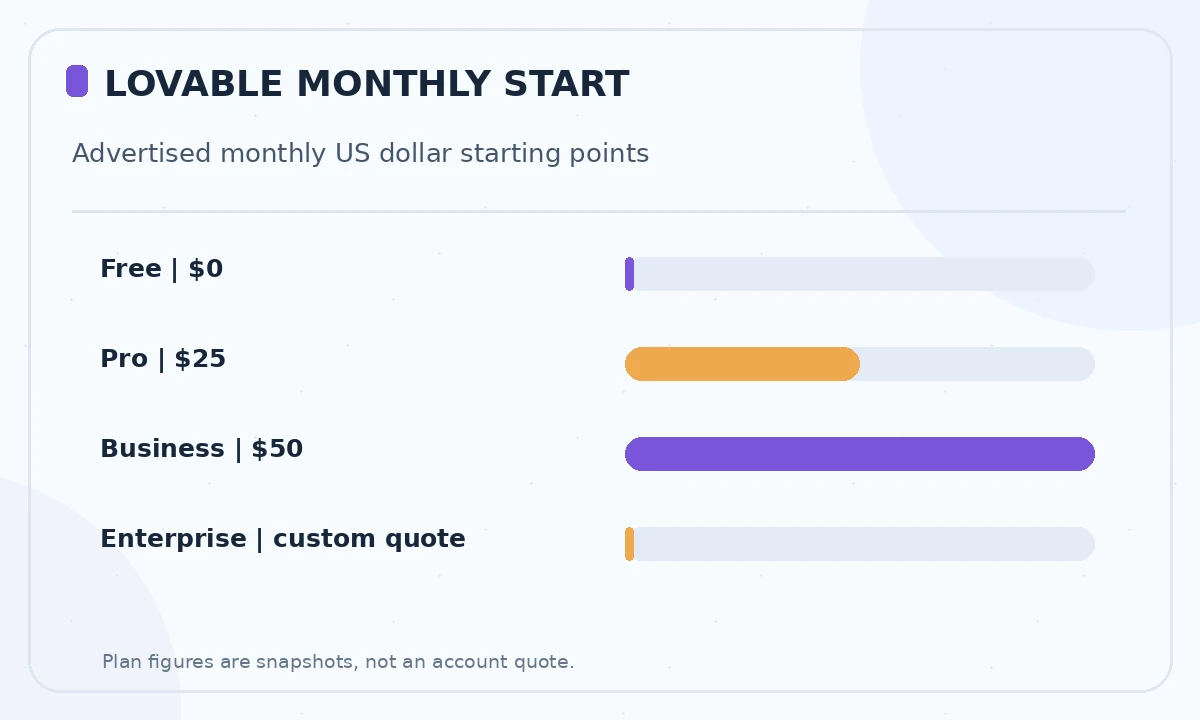
As checked October 26, 2026, Lovable’s official US pricing page advertises Free at $0, Pro starting at $25 per month and Business starting at $50 per month in the monthly view, with Enterprise offered through sales. The page is interactive and changes for annual billing and credit selections, so these are visible starting examples rather than fixed prices for every configuration.
Start with the distinction between credits and seats
Lovable describes a workspace as the home for projects, members and a shared credit pool. Its documentation says plans are priced by credits rather than by projects or individual seats. Pro’s displayed starting configuration includes 100 monthly credits and allows unlimited users, while Business displays 100 Business credits at its entry selection. This does not imply that a credit buys one finished application or one fixed-length message.
For a buyer, the correct denominator is cost per accepted outcome: a validated screen, working flow or released improvement. Keep a running log of credits used while completing those outcomes. If revisions balloon because requirements are vague, a larger credit bucket may subsidize waste instead of improving productivity.
Read the Free plan’s real scope
Free is listed at $0 with the ability to build in Lovable Cloud and collaborate, plus limited lovable.app domains and invite-only publishing on the current page. The free grant and any daily or monthly credit allowance must be confirmed in the live workspace, where they can differ from a marketing snapshot. Free is best for experiments with synthetic data and simple workflows whose audience can remain limited.
Do not assume that “unlimited collaborators” means unlimited build credits, custom domains or unrestricted production hosting. A free project still needs a data and permission plan, especially if you invite testers. Use non-sensitive content until you can verify storage location, user access and the app’s public exposure.

What Pro pays for beyond more generation
The current Pro starting view shows $25 a month for 100 monthly credits. Its listed benefits include custom domains, removal of Lovable branding, credit top-ups, member credit limits, project roles and design-system functionality. The pricing page describes credit rollover for one month on monthly plans, or until one month after an annual plan ends. That is a limited carryover rule, not permanent credit storage.
Pro fits a small team repeatedly creating and improving customer-facing apps, provided it can review security and handle cloud operations. Evaluate the upgrade against concrete requirements such as a branded domain and design consistency. If you mainly want a private internal demonstration with no external users, see whether a lower tier covers your precise access arrangement.
When Business and Enterprise controls matter
Business starts at an advertised $50 a month for its entry credit amount. It includes Pro features plus organizational workspace capabilities, SSO, a security center, templates and workspace-only publishing controls. These are governance distinctions, not proof that every generated app is compliant or secure. Ask your IT administrator whether required roles, identity integration and access review are available for your workspace.
Enterprise uses custom platform and volume-based terms and advertises expanded governance such as audit logs, directory synchronization and controlled publishing. If your organization needs data residency or procurement assurances, request written terms and verify which controls apply to the selected plan and hosting region. Sales descriptions should not replace a security assessment or contractual review.
Account separately for Cloud and AI features
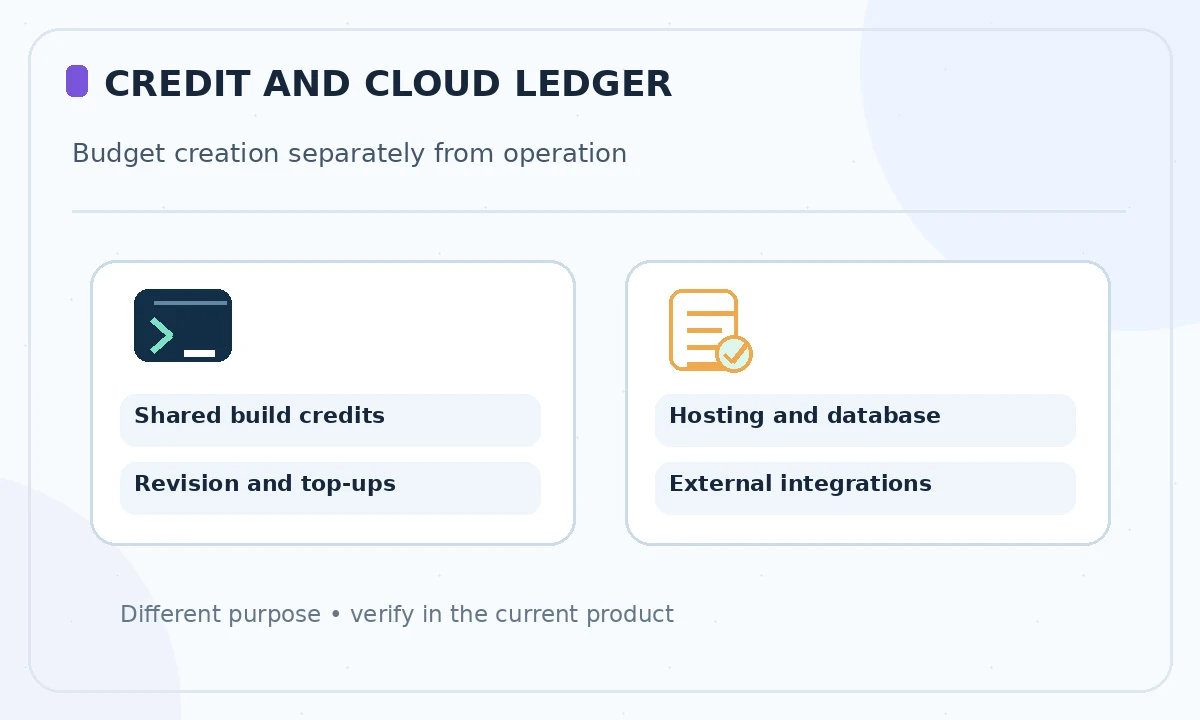
Lovable generates an application and may run its backend, authentication, database and other features through Lovable Cloud. Vendor documentation distinguishes subscription build credits from cloud or AI-feature consumption and usage limits. A build allowance is therefore not an all-inclusive guarantee for database storage, application traffic or every model request made by end users.
Make two budgets: development activity while editing the app and operations after publishing. Include database growth, user activity, third-party APIs, custom domain management and backup requirements. Before inviting customers, review the workspace usage dashboard and alerts; the best subscription cannot compensate for unmanaged cloud consumption.
Compare monthly and annual commitment accurately
The Lovable pricing selector advertises an annual option described as two months free, while the monthly view shows the $25 and $50 starting prices. To compare plans, calculate total cash charged for the selected annual commitment and divide by twelve only for an annualized comparison. Do not mistake a yearly-discounted monthly equivalent for a cancel-anytime monthly invoice.
Check which credit package is selected, whether member-level allocations have been configured, how top-ups are billed and the exact expiration of credits. Promotional grants, student discounts and Enterprise packages can behave differently. Save a screenshot or invoice before committing rather than relying on a price quoted in an older review.
Build an evidence-based team budget
Imagine a nonprofit planning a volunteer sign-up portal, an event dashboard and a member-only admin view. Treat each as a separate deliverable. Give the team a credit ceiling for requirements and prototype work, another allocation for fixing validation issues, and a small reserve for the first live-user feedback round. This is a sample planning framework; it makes no claim about how many Lovable credits these features actually require.
After several genuine sessions, measure credits per accepted milestone and re-estimate the rest. Have an owner approve large changes or integrations that increase operational risk. If the budget is mostly consumed on rewriting unclear copy or debating features, refine the product specification before buying another package.
Use a purchase and safety checklist
Before upgrade, confirm the exact current plan name, selected credits, billing interval, publishing visibility, domain policy, storage location and who can deploy. Validate row-level data permissions and secret handling in the generated app. A Business security center or an automated scan is useful evidence, but no scanner guarantees that your business logic or every access path is correct.
Stay on Free while learning with synthetic data, choose Pro when recurring building and branded deployment matter, and consider Business when identity and team governance genuinely require it. Revisit checkout after product changes; this dated guide is editorial research, not a live quote or hands-on performance benchmark.
How We Research
We reviewed the current primary-source documentation as of October 26, 2026: Lovable official pricing; Lovable documentation overview; Lovable published security controls. We distinguished documented plan features and limits from editorial workflow suggestions, and we compared the intended reader task with the previously published LabFin material. We did not purchase plans, perform product benchmarks, run code or verify an individual account’s entitlements. Where product pages conflict or terms may change, we have identified the uncertainty and recommend confirming checkout or live account details.
Frequently Asked Questions
The current official description emphasizes a shared workspace credit pool with unlimited collaborators on listed plans, rather than a basic per-seat build fee.
The official monthly view advertises $25 per month for a starting package of 100 monthly credits; verify the selected package and billing interval.
No. Business adds workspace governance, SSO, security-center and private organizational publishing features beyond Pro.
The official page describes limited rollover for monthly and annual plans, with expiry conditions; check your actual balance.
No. Separate operational consumption and usage constraints should be reviewed before relying on a live app.