
A museum wants a friendly guide who explains a collection without copying a curator’s real voice or impersonating a historical figure. Picking a random preset narrator can create the wrong tone, while asking for a celebrity sound-alike raises unnecessary ethical and consent problems. ElevenLabs Voice Design generates original voice options from a written description. Its current documentation describes three preview choices, guidance controls and the possibility of saving a selected voice; it also cautions that Voice Design remains experimental. This guide uses a fictional exhibit and sample script, with original visual audition cards rather than any actual generated speech. The objective is a suitable, intelligible narrator and a transparent approval process, not an imitation of a known person.
Set a character brief that avoids impersonation
Describe the voice’s function before its dramatic qualities. A museum guide must be calm, clear to visitors using headphones and respectful when discussing difficult history. Specify native language, a broad regional language variety where useful, comfortable pace, warmth and restrained expressiveness. Do not request the voice of a named real actor, local historian or former employee. An identifiable sound-alike can create consent, endorsement and authenticity concerns, even if the prompt is intended as a compliment. Keep a fictional persona name and a statement that the guide is an AI narrator. Ask the curatorial team to approve the tone brief before generation. The role, not a celebrity reference, should be the creative anchor.
Write a preview that tests more than one sentence
The vendor explains that preview text influences the apparent personality of a voice. Use a paragraph resembling the eventual guide, not an extreme shout that clashes with a calm narration request. Include an unfamiliar exhibit term, a year, a short quotation and a sentence with a question. For example, a fictional gallery introduction might mention a ceramic vessel, the year 1924 and a request for visitors to move into the next room. These are test words, not verified exhibit facts. By using the same text for multiple candidates, reviewers can compare pacing and pronunciation meaningfully. Avoid using a real visitor’s personal details, unpublished archive excerpts or third-party voice samples in a prompt.

Prompt for articulation, pace and an appropriate register
ElevenLabs recommends specificity about language, accent, tone, timbre and delivery. A useful fictional brief might say: Native US English, adult narrator, clear studio-quality audio; persona: welcoming museum guide; emotion: curious and measured; warm, lightly textured voice with deliberate pronunciation and unhurried sentence endings. A prompt should not conflate accent with intonation: the documentation warns that calling for an accent when you mean emphasis can change regional dialect unexpectedly. It also advises against loading voice-design prompts with recording-effect words such as echo or tape when the intent is a clean performance. Record the exact prompt for comparison and future updates.
Compare the three previews with one rubric
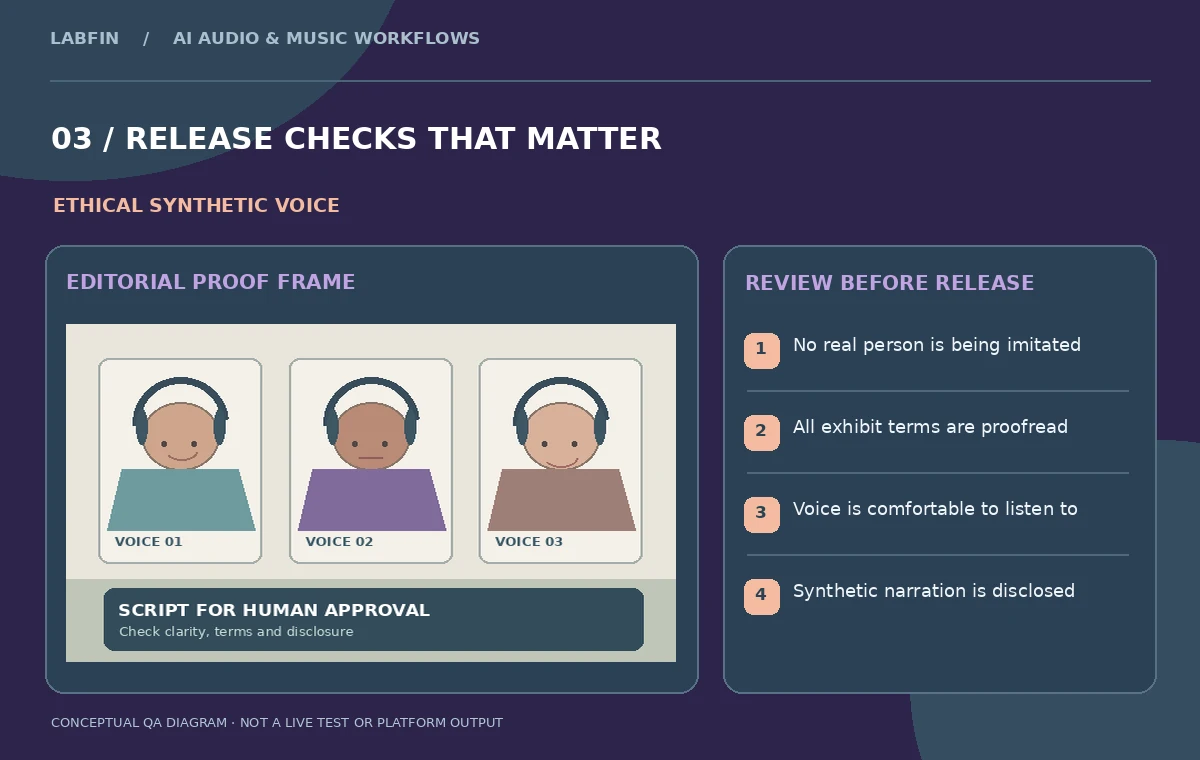
The current creator guide says Voice Design presents three candidate options and a preview-text credit charge; check the current account display for credit and slot consequences before selecting. Listen in a shuffled order if possible to reduce the tendency to prefer the first voice. A short scorecard can examine intelligibility, correct pronunciation, warmth, fatigue over a longer passage and whether the voice appears to resemble a real person’s voice too closely. Do not pre-fill a winning candidate or numerical rating: no account-generated audio was tested for this tutorial. The visual comparison uses three empty audition cards to teach the review process rather than to imply measured quality.
Avoid making sliders sound like objective quality scores
ElevenLabs documents Loudness and Guidance Scale controls. Higher guidance can better constrain a particular prompt but may compromise audio quality when the specification is unusually niche; lower guidance may allow more variation. There is no universal ideal value for every museum or language. Adjust one dimension at a time and replay the same paragraph. A slightly less exact age or timbre may be acceptable if sentence endings and consonants are substantially clearer. Separate spoken delivery from post-production loudness normalization. If the sample clips have different playback levels, match perceived loudness before choosing, or reviewers may pick a louder voice simply because it seems more present.

Verify dates, unusual words and cultural tone
A museum narrator can pronounce a technical term convincingly while still getting it wrong. Have a subject specialist check exhibit names, dates, language variety and names of living people against the museum’s approved text. If pronunciation is uncertain, create an approved phonetic note or rewrite the phrase into something clear and accurate. Do not attribute invented quotations to actual historical individuals. Test speech speed with visitors who use captions or assistive devices, and ensure essential information is available as readable text. An artificial voice cannot certify the accuracy of a historical claim. Keep the script authoritative through human editorial verification rather than relying on the narrator’s confident delivery.
Check the saved voice across the real exhibit
After choosing a candidate, generate several different sections rather than trusting a single preview. Listen for identity drift, emphasis on numbers, long-sentence breath behavior and emotional consistency. The help center says experimental Voice Design quality can vary; it contrasts this with Professional Voice Clones as an option for cases demanding high consistency, subject to appropriate rights. The museum’s goal here is not cloning anyone. Avoid overselling Voice Design as a guaranteed replacement for a trained actor. If several minutes of narration sound tiring or the voice changes across sections, revisit the brief or commission an authorized human recording. Compare on public-facing speakers and quiet headphones as well as production monitors.
Publish with disclosure, approval and a future replacement plan
Save the prompt, preview text, approved script, candidate identifiers, selected voice and listening notes. State whether the final audio is AI-generated, subject to the museum’s disclosure and accessibility policies. Obtain agreement from editorial, education and accessibility reviewers, and verify that service terms permit the intended presentation. Deliver subtitle text and readable exhibit captions in case guests do not want synthetic audio. Keep version names stable so new exhibits do not accidentally switch to an unapproved persona. The conceptual visuals in this article are not ElevenLabs screenshots or synthesized-waveform results. A good fictional guide serves the visitors and stays clearly separated from any claim that a real curator spoke the lines.
How We Research
This ElevenLabs Voice Design guide is independent editorial guidance grounded in official documentation: ElevenLabs: Voice Design creator guide; ElevenLabs: Voice Design help center; ElevenLabs: Voice Design API guide. The illustrated scenario is a fictional museum creating an original English-speaking audio guide persona with three candidate voices and accessibility review. We checked the vendor-described capabilities and important eligibility conditions, then mapped a sequence of editorial reviews that readers can repeat with their own authorized media. The images are original teaching diagrams, not product UI screenshots, generated exports, results of a live account test, or measured benchmarks. We did not upload private recordings, access a paid vendor account, run a real A/B experiment, measure performance, or verify hypothetical timecodes. Retain source assets, check current plan availability and privacy settings, and review exported media and metadata before publication.
Frequently Asked Questions
ElevenLabs currently describes three generated voice options before choosing one to save.
No. Voice Design creates a voice from descriptive text and does not require a source recording.
Yes. The official guide recommends clear language, regional variety, timbre and delivery descriptions.
No. ElevenLabs says Voice Design is experimental, so check multiple passages and contexts.
Use the institution’s disclosure rules and avoid suggesting a real person voiced AI-produced audio.