
There is no meaningful overall winner among AI music generators if one creates catchy vocal songs but another is better for adjustable background cues. The defensible comparison is by output format, licensing route and ability to actually deliver files. This is a documentation-based buying guide, not a claim of hands-on listening tests or a measured audio quality ranking.
Quick recommendations by job to be done
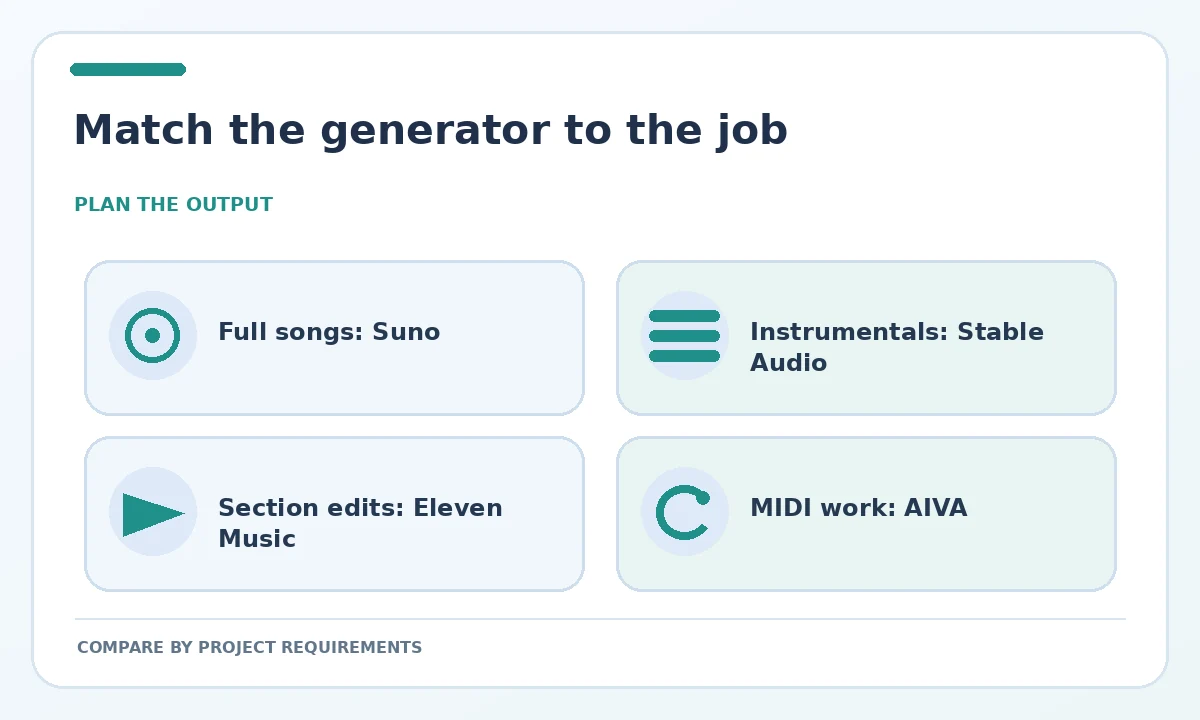
For a creator who wants a complete vocal song with an identifiable hook, start by evaluating Suno and Eleven Music. For instrumental background beds, sound design or workflows that value deployment flexibility, investigate Stable Audio. For a composer who wants MIDI and composition-oriented exports, AIVA deserves a look. Udio may be worth exploring for in-platform creation, but its own help center states audio, video and stem downloads are currently disabled. That limitation rules it out for many client handoffs even if users like its generation experience.
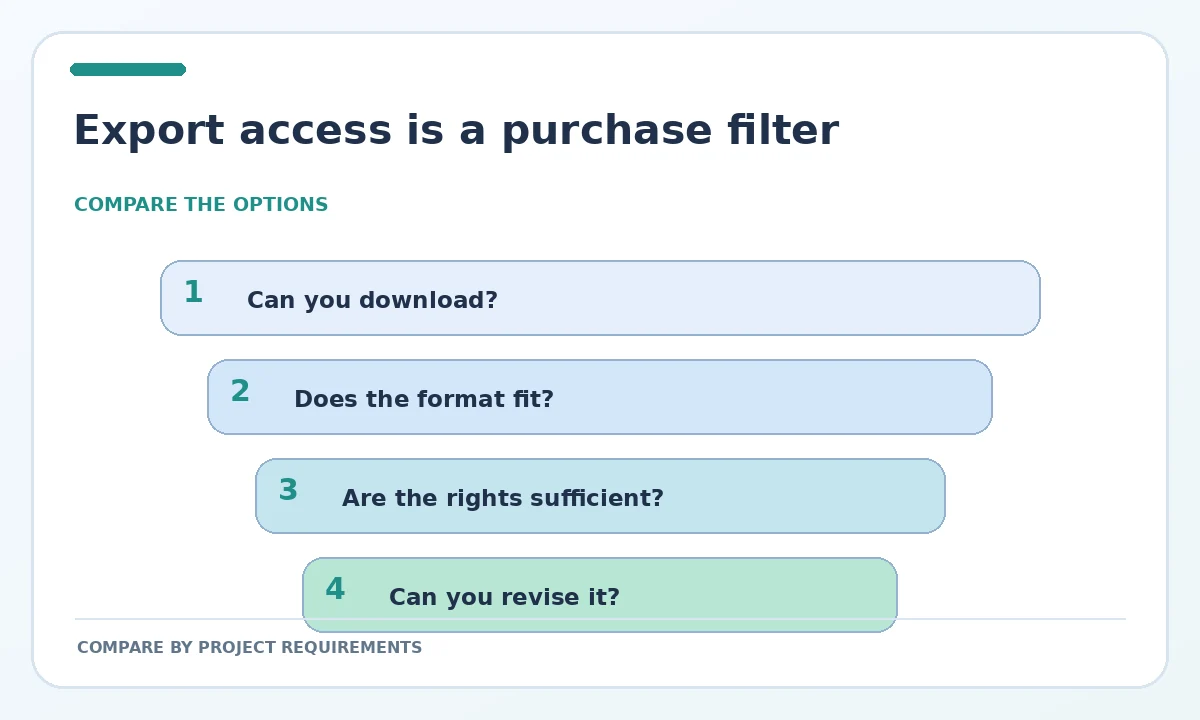
These are shortlisting recommendations, not tested scores. Ask which output you must hand to a client: a finished audio file, separate stems, MIDI to arrange manually, or only a shareable player link. The answer can eliminate a tool before you pay or spend hours learning its prompt system.
Suno: complete songs, with an important download constraint
Suno offers song generation, remixing, stem-related editing and subscription tiers. Its September 2026 policy introduced limits on downloads: the official announcement describes Pro and Premier allowances and specifies special treatment for Premier members using Suno Studio. The creation interface may let you iterate extensively, but a finished catalog of generated tracks is not the same as unlimited exported files. Plan the number of actual deliveries you need.
Suno explains that eligible paid downloads carry commercial use rights, while free-tier usage is different. Do not reuse a song containing another person’s lyrics or a copyrighted melody merely because the generated recording is new. If you are making client work, preserve a receipt, terms snapshot and per-track download date. This is particularly important when a team generates drafts before purchasing a subscription.
Stable Audio: instrumentals and license flexibility
Stability AI describes Stable Audio 3.0 as a family that includes open-weight models and hosted options. Its own licensing documentation allows numerous commercial uses, including monetized videos and software sound assets, subject to the relevant terms. Open-weight deployment comes with its own license boundaries, including an organizational revenue threshold; it is not synonymous with ‘no conditions.’ Stable Audio is therefore attractive for a workflow that values instrumentals, export options or control of infrastructure.
The trade-off is musical scope. Stability’s own comparison notes that its 3.0 offering does not generate vocals or lyrics. That makes it a poor single-tool choice for a songwriter who needs a sung chorus. Assess whether a producer can assemble the required tracks, whether your hardware and team can manage self-hosting, and whether an API service would be simpler than maintaining a local model.
Eleven Music: structured prompts and section changes
ElevenLabs’ Eleven Music documentation describes complete tracks, genre and arrangement controls, multilingual vocals and editing of individual song sections. It emphasizes commercial use, while directing users to Music Terms for exact rights by plan and scenario. That distinction matters: a product-level statement is not a substitute for reading conditions on advertising, standalone distribution or a client handoff. If you already produce narration in ElevenLabs, one workspace for music and speech may reduce coordination work.
Test the workflow conceptually against your deliverables. Can the required account export the format you need? Can a collaborator replace one chorus without rebuilding the entire piece? Is the license adequate for the channel where the asset will appear? Those questions matter more than the size of a model or a polished example embedded in marketing pages.
AIVA: composition assets with tier-specific rights
AIVA explicitly separates a no-cost, noncommercial Free tier, a Standard tier that describes limited monetization on named social platforms, and a Pro tier that advertises broader rights and additional export formats. Its pricing page includes MIDI downloads and, at higher tiers, high-quality audio exports. That makes it worth considering for musicians who plan to arrange or revise a composition rather than only accept a single rendered performance.
AIVA’s contractual claim about ownership must not be confused with a government determination that every AI-generated element qualifies for copyright. For a client who requires a particular legal outcome, review the actual agreement and the role of human arrangement. Do not assume a ‘Pro’ label means exclusivity, originality against all other outputs or freedom to imitate identifiable composers.
Udio: evaluate export restrictions before anything else
Udio’s February 2026 help-center update on its UMG partnership says that downloading audio, video and stems is disabled. It also describes updated subscriber credit allowances. A prospective user who needs an MP3 delivered to a game studio or advertising agency should treat downloadable output as a gate, not a secondary feature. A strong in-browser demo cannot substitute for a usable asset outside the service.
If Udio later changes these restrictions, reassess using its own dated help documentation rather than old comparison articles. When reading community impressions, separate subjective sound preferences from verifiable issues like export access. The latter may determine the purchase decision regardless of audio aesthetics.
Comparison matrix: rights, file handoff and editing
Create a scorecard with columns for intended use, output types, editing control, plan-specific rights, upload privacy, team sharing and cancellation effects. Fill it with actual provider documentation rather than a made-up 1–10 rating. A songwriter may weight lyrics and sections highest; a video editor weights unobtrusive instrumentals and downloadable files; an app developer weights licensing and integration. Different priorities produce different shortlists, so declare them before evaluating samples.
For a fair listening exercise of your own, give candidates one stable brief, record the model and account, and check the same thirty seconds at matched volume. Do not call such an exercise an independent benchmark unless it has actually been completed and described transparently. Keep the human review notes qualitative: structure, distractiveness, artifacts and editing flexibility.
Licensing is not copyright, and neither guarantees originality
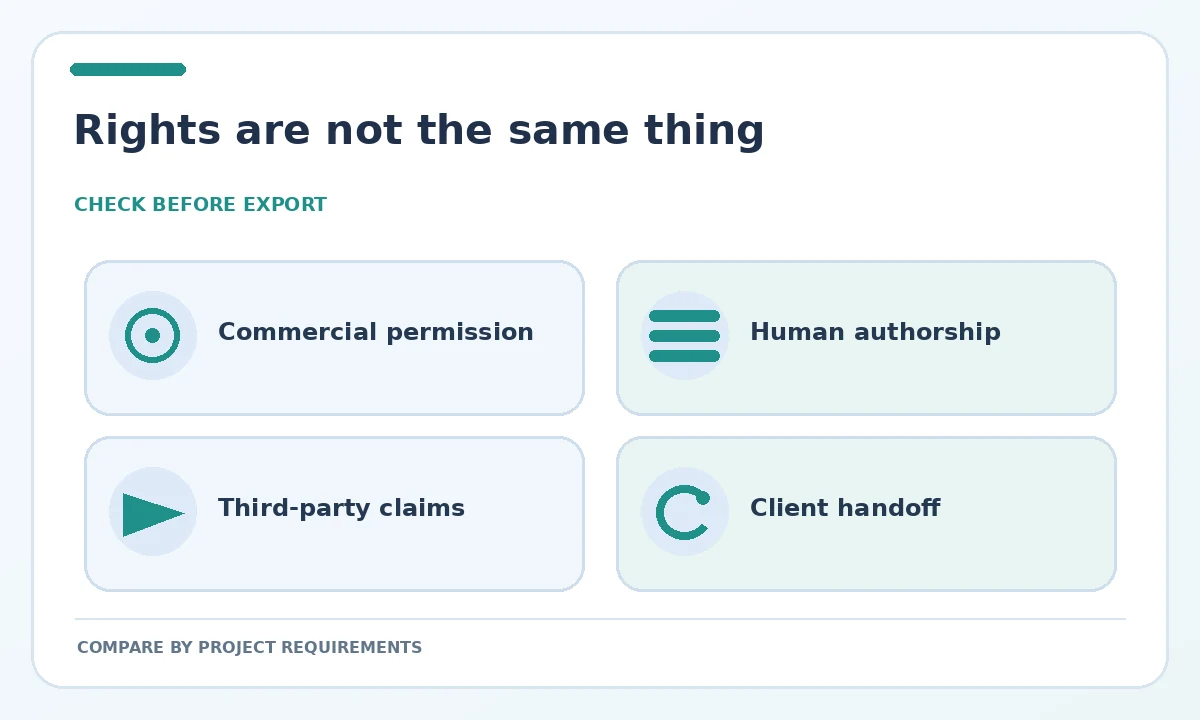
The US Copyright Office’s 2025 analysis stresses human authorship when evaluating protection of AI-containing works. Vendor terms can grant a right to exploit platform output without guaranteeing copyright registration, clearance from third-party claims or exclusivity. Suno itself warns of this distinction. AIVA and Stable Audio use their own contractual language, which should be read for the specific tier and deployment rather than transferred to all platforms.
Before publishing, record who created the prompt and edited the arrangement, what external samples or lyrics were included, the plan active at download, and where the track will be distributed. If a client needs indemnification or a unique brand composition, specialist legal advice or a commissioned human composer may be more reliable than a generic AI subscription.
How We Research
We compared primary materials: Suno 2026 policy, Stable Audio rights, Eleven Music documentation, AIVA plans, Udio downloads, and the Copyright Office. This is a feature-and-contract comparison, without fabricated trials or numerical quality ratings. Checked October 27, 2026.
Frequently Asked Questions
Start by comparing Suno and Eleven Music for the specific structure, vocal and export needs of your song. There is no universal winner based solely on documentation.
Stable Audio is a sensible candidate for instrumental and production workflows. Confirm which model, export path and license apply to your intended project.
Udio documentation says audio, video and stem downloads are disabled following changes associated with its Universal Music Group partnership.
No. AIVA describes Standard as limited monetization for specified social platforms, while its Pro marketing describes broader use. Check current plan terms.
No. A vendor license is not a copyright decision. The US Copyright Office examines sufficient human-authored expressive elements in AI-assisted work.